
Build confidence in children with everyday support
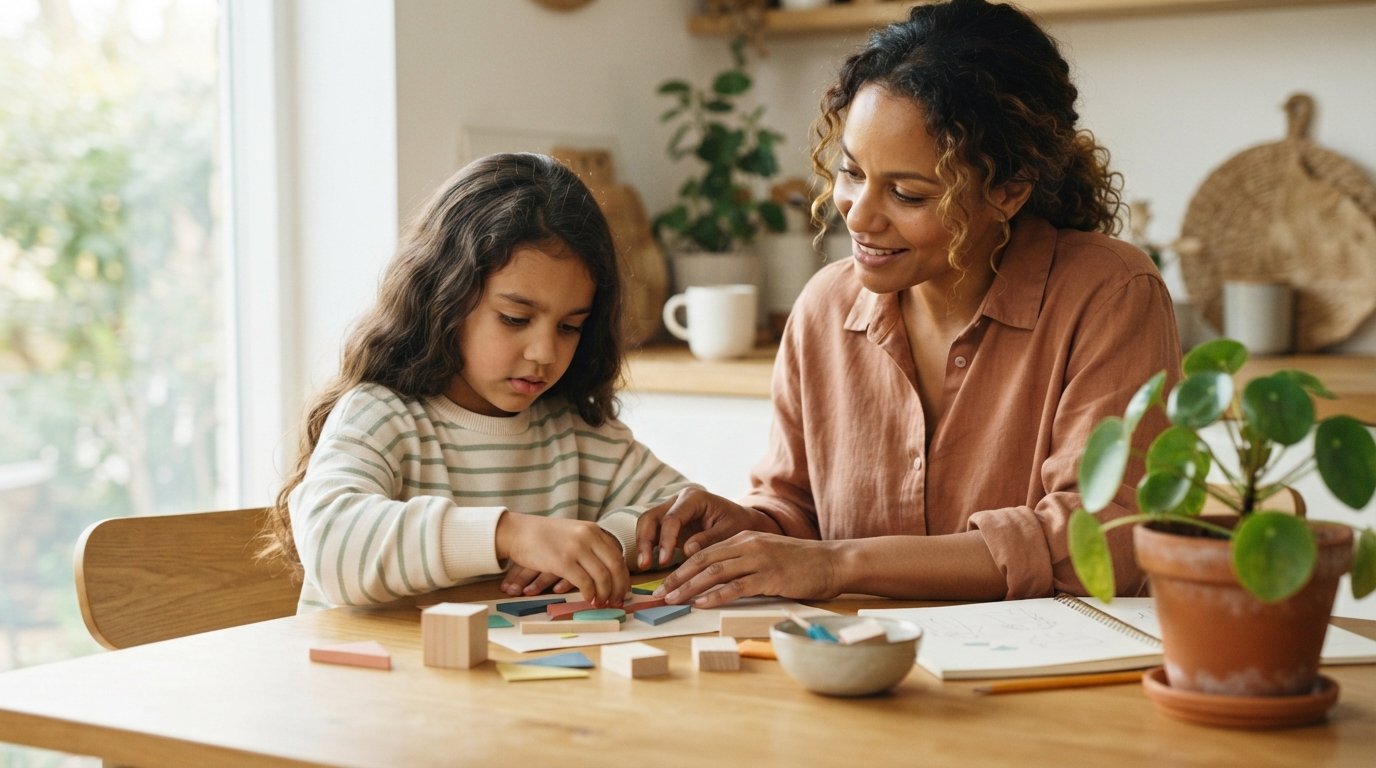
Confidence grows through ordinary moments, not a single grand gesture. To build confidence in children, give them age-appropriate tasks to try, recognise their effort and perseverance, and show them how you respond to your own mistakes. Feeling loved and listened to matters just as much as learning to do things independently.
If you’re supporting a child who hesitates, gets discouraged or doubts their abilities, it’s understandable to wonder whether you’re saying the right thing. Small, steady responses can help, and confidence looks different in every child. There’s no need to push a child to be the loudest in the room.
This article explores how modelling confidence, responding calmly to setbacks and building supportive relationships can help. You’ll also find practical ideas for everyday activities and ways to talk about feelings, so children can practise new skills, make sense of difficult moments and grow at their own pace.
Key Takeaways
- Notice and praise a child’s effort, perseverance and progress, not only the result. Specific encouragement can help them feel ready to try again.
- Let children see you work through challenges and speak kindly to yourself when something goes wrong. Everyday examples can show that confidence includes learning as you go.
- Respond to mistakes with calm curiosity. Help children recognise unhelpful self-talk and see difficulty as part of learning, not proof they cannot succeed.
- Offer chances to explore interests, make age-appropriate choices and connect with caring people, while giving support that fits the child and the situation.
- Build emotional literacy by listening to children’s worries, naming feelings together and breaking daunting tasks into manageable steps.
1. How do you build a kid’s confidence and self-esteem?
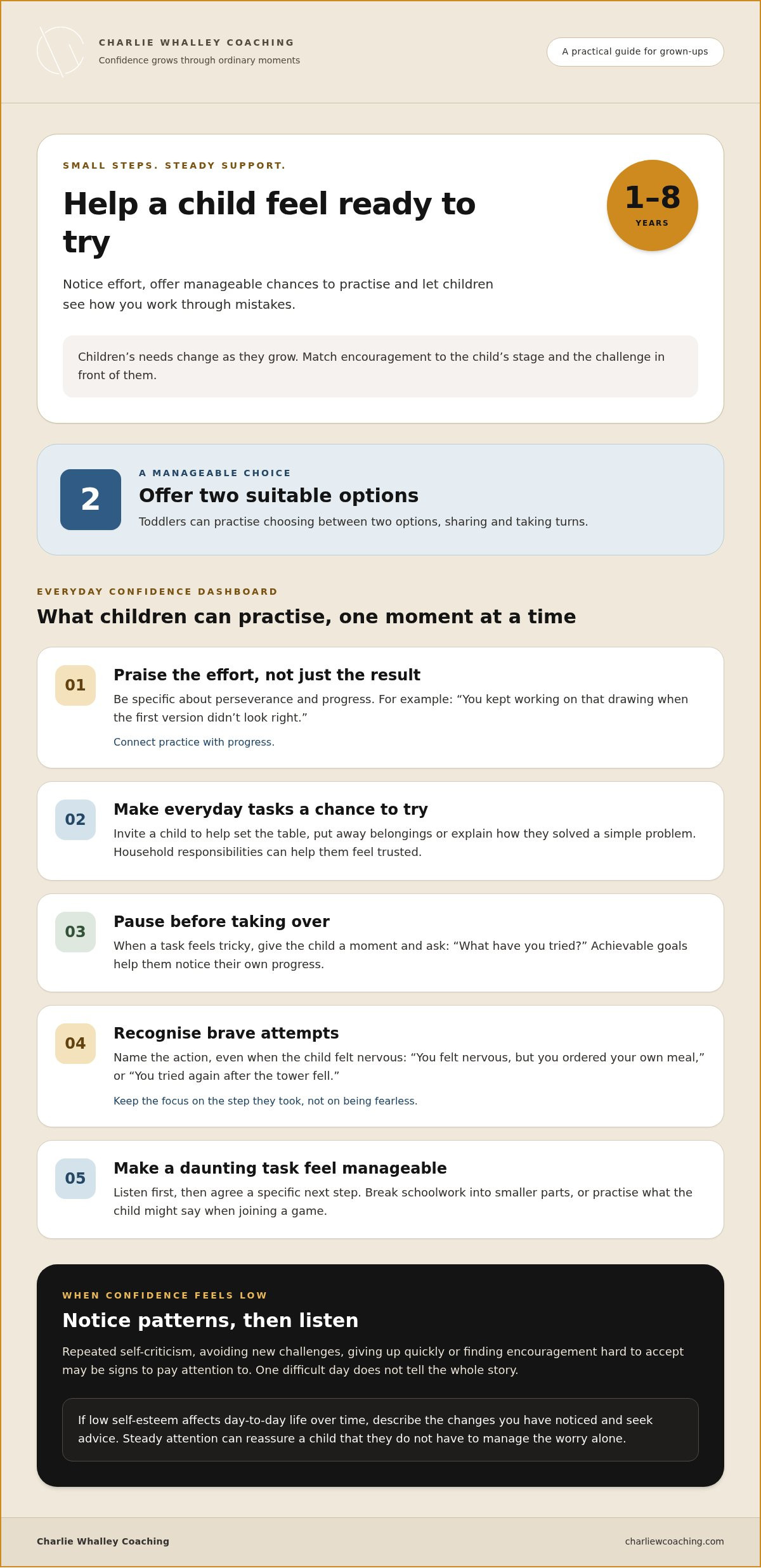
To build confidence in children, notice what they do as they learn, not only what they achieve. Instead of saying, “You’re the best artist”, try, “You kept working on that drawing when the first version didn’t look right.” Specific praise links effort with progress. It also shows that skills develop through practice rather than appearing fully formed.
Children’s needs change as they grow. Warm, responsive interactions help babies feel secure; toddlers can practise choosing between two suitable options, sharing and taking turns. Preschoolers often notice what other children can do, whilst school-age children may worry about learning, appearance, sport or friendships. Across ages 1 to 8, match encouragement to the child’s stage and the challenge in front of them.
Everyday activities offer manageable chances to practise. Invite a child to help set the table, choose between two snacks, put away their belongings or explain how they solved a simple problem. If a task feels tricky, pause before taking over and ask, “What have you tried?” Household responsibilities can help children feel trusted, while achievable goals let them see their progress.
Praise perseverance and brave behaviour with details the child can recognise. You might say, “You felt nervous, but you ordered your own meal,” or “You tried again after the tower fell.” A small, agreed reward can recognise a brave step, but keep the focus on the action, not on being fearless. Choose goals that stretch the child without making success feel out of reach.
Low self-esteem may show up as repeated self-criticism, avoiding new challenges, giving up quickly or seeming unable to accept encouragement. A child might say, “I’m no good at reading,” or stay silent when they have an idea. One difficult day doesn’t tell the whole story. Notice whether these patterns persist across activities such as schoolwork, sport and time with friends.
If a child lacks confidence socially or academically, listen first, then make the next step specific and manageable. For a school task, break the work into smaller parts and acknowledge each effort. For a social worry, practise what they might say when joining a game. Ask for their ideas, and remind them that you value those ideas even when you disagree.
Seek advice if low self-esteem or lack of confidence affects your child’s day-to-day life over time. Describe the changes you’ve noticed, such as avoiding schoolwork, withdrawing from friends or regularly speaking harshly about themselves. This context can help you decide what support is appropriate, while your steady attention reassures your child they don’t have to manage the worry alone.
2. Modeling confidence
Children notice how adults behave when plans change, a task feels difficult or someone disagrees. Your response can show that confidence doesn’t mean being free of nerves. Before making an unfamiliar phone call, for example, say, “I’m a little unsure, so I’ll write down what I need to ask.” Then make the call. The child sees you take a manageable step despite feeling uncertain.
When frustration rises, make your calming process visible. Pause, take a slow breath and name what’s happening: “I’m annoyed that the pieces don’t fit. I’ll try another way.” This gives children language for strong feelings and a practical sequence to follow. It also shows that staying calm is something you practise, not a quality you either have or lack.
Adults can model resilience by describing what they learned after a setback. If a recipe burns, for instance, avoid calling yourself hopeless. You could say, “I left it in too long. Next time, I’ll set a timer.” The child hears an honest explanation, a specific adjustment and a reason to try again. Failure becomes something to learn from, not a judgement about personal worth.
Children also learn from how adults speak about themselves and others. Replace “I’m terrible at this” with “I haven’t learnt this skill yet.” If a colleague makes an error, discuss it respectfully rather than mocking them. These small choices help shape a child’s self-esteem and show them how to treat friends patiently when they’re struggling.
Caregivers and educators can reinforce the same message through everyday routines. At home, a parent might talk through a difficult decision aloud; in class, a teacher might demonstrate how to begin an unfamiliar activity. Both can show the first step, explain their thinking and invite children to choose what to try next. Consistency between adults helps children see that asking for help and trying again are sensible responses.
Role modelling doesn’t mean pretending you’re always composed. If you snap during a rushed morning, return to the moment and make amends: “I spoke sharply. I was stressed, but I should have used a kinder voice.” This demonstrates accountability without asking a child to manage your feelings. It also makes confidence more realistic: people can make mistakes, take responsibility and reconnect.
Look for chances to describe a brave attempt, whether you’re learning a new route or speaking up in a meeting. Keep the focus on the action: “I was nervous, and I asked my question anyway.” Children can then see confidence as something built through trying, recovering and choosing a next step, with others offering support along the way.
3. Responding to negative self-talk and mistakes
When a child says, “I’m stupid,” resist trying to talk them out of the feeling straight away. Try, “That sounded disappointing. What happened with the puzzle?” Naming the moment helps you understand whether they feel stuck, embarrassed or worried about others’ reactions. Then you can respond to the challenge, rather than treating one painful sentence as the whole story.
Make mistakes safe to discuss by listening before correcting. If your child spills paint on a school project, pause before pointing out the mess. Ask, “What were you trying to do?” and “What could help now?” This keeps the conversation focused on their choices and next steps. Children are more likely to talk openly when an error doesn’t immediately bring blame or ridicule.
Once the first upset has eased, separate the event from the child’s identity. “The spelling was difficult today” describes a task; “You’re bad at spelling” turns it into a judgement. You might say, “You missed those words, and we can practise them together.” This can help children see challenges as specific and manageable, rather than proof they can’t learn.
Accepting mistakes doesn’t mean pretending they have no impact. If a child knocks over a friend’s model, acknowledge the damage and help them decide how to repair it. They could apologise, ask what would help or assist with rebuilding. This teaches responsibility alongside self-compassion. The mistake matters, but it doesn’t diminish the child’s worth or their ability to make amends.
For negative self-talk, help your child examine the words they use. If they say, “I always get everything wrong,” ask for one example from that day. Then invite a more balanced description: “I got that question wrong, but I finished the page.” Avoid insisting they say something cheerful they don’t believe. An honest, kinder statement is a more useful first step.
During a difficult moment, keep your response brief and calm. A child who has lost a game may not be ready for advice, so acknowledge the feeling first: “You wanted to win, and you’re disappointed.” When they’re ready, ask whether they want to talk, take a break or try again. Offering those choices gives them space to process frustration without shame.
Later, revisit what happened when your child feels settled. Talk through the sequence: what was difficult, what they did and what they might try next time. If a drawing didn’t turn out as planned, they might use different paper or ask for help with one part. This reflection helps children learn from mistakes without expecting themselves to be perfect.
4. Trying activities and connecting with supportive people
A new activity can help your child discover what they enjoy and what they can learn. Let them choose between drawing, swimming or helping prepare a meal, then focus on exploring rather than excelling. If they hesitate, agree on a small first step, such as watching a class before joining. This makes trying feel manageable and gives confidence room to grow.
For a shy or sensitive child, a quieter approach may feel safer than a large group. You might invite one trusted friend over, practise a greeting at home or arrive early so the room feels less busy. Stay nearby without answering for them. Notice what helps your child feel settled, and let them take part at their own pace.
Toddlers can practise independence through simple, safe choices. Offer two shirts, let them carry a spoon to the table or ask which toy they want to put away first. These small decisions help them explore what they can do. If a task becomes difficult, give a hint or demonstrate one step, then let them have another turn.
Shared laughter can strengthen connection during everyday routines. Make up a silly song while tidying blocks, or enjoy your child’s joke without rushing back to chores. Giving them your attention shows that their ideas matter. A warm exchange can help a child feel included, supporting their developing sense of self and confidence with others.
Supportive environments make room for different ways of joining in. At a family meal, invite everyone to share a thought, but don’t insist that a quiet child speak on demand. In a classroom or playgroup, predictable routines and useful ways to contribute, such as handing out crayons, can help children feel they belong.
Some parenting approaches can make a child doubt their abilities, including constant comparison, harsh criticism, taking over every difficult task or dismissing feelings. Instead of saying, “Your sister did this faster,” calmly offer to work through one part together. Clear limits can still feel kind when adults listen and follow through consistently.
Screen time and social media affect children differently, so notice how a particular activity leaves your child feeling. Ask what they enjoyed, whether anything online made them feel left out and how they feel afterwards. If a video or conversation is upsetting, listen without blame and help them choose a more comfortable next step.
When your child faces a problem in a club, friendship or activity, help them identify a trusted person they can approach. You might practise saying, “Can I join in?” or “I need some help,” then let them choose when to try. This balance of preparation and independence supports learning without making you the focus of every interaction.
5. Building confidence at school through emotional literacy
A school day can bring excitement, friendship worries and difficult tasks, sometimes all before home time. Help your child name the feeling before trying to solve the problem: “Are you worried about reading aloud, or about what classmates might think?” Listening without rushing to correct them helps parents and teachers understand what support would make the next step manageable.
Children can learn to recognise how strong emotions affect their thoughts and bodies. If your child feels nervous before joining a playground game, ask what they notice and what they imagine might happen. Then explore a response together, such as standing near a familiar classmate or asking, “Can I play too?” Practising the words at home can make the situation feel more familiar.
Gradual brave practice means approaching a worry in small, realistic steps rather than expecting a child to leap straight into the hardest situation. A child uneasy about speaking in class might first share an answer with you, then practise with a friend, and later speak in a small group. Acknowledge the effort at each stage, even if the child still feels nervous.
Confidence also grows through mastery experiences: chances to learn a skill, notice progress and take on a little more. If tying shoelaces feels difficult, let your child practise one part, such as crossing the laces, before attempting the full knot. Offer a prompt when needed, then step back as their ability develops. The goal is meaningful participation, not flawless performance.
Turn-taking games give children a relaxed way to practise cooperation. During a simple card or board game, they can wait, follow shared rules, manage disappointment and congratulate others. If a child struggles when losing, name the feeling and keep playing together. These small social opportunities can help them practise cooperative skills before similar moments with classmates.
Parents and educators can support confidence at school by responding calmly to concerns and breaking overwhelming work into clear steps. For a long writing task, agree to plan the opening together, then let the child draft it independently. A predictable classroom routine and a meaningful role, such as handing out materials, can also help a pupil feel included and capable.
After school, ask about one moment that felt easy and one that felt hard. If your child says, “Nobody wants to be my friend,” listen first, then ask what happened during lunch or playtime. Explore the specific situation together instead of dismissing the worry or deciding what others intended. Ready to explore support for your child’s confidence? Charlie Whalley Coaching offers Kids Coaching.
Charlie Whalley Coaching: Life & Leadership Coaching
Charlie Whalley Coaching offers Kids Coaching for families looking for support as a child works through self-doubt or confidence challenges. The everyday ideas in this article can help you respond with care; coaching can offer a space to explore what may help your child take their next steps. You might consider it when worries about confidence are affecting family life, or when you’d value guidance tailored to your child’s situation. Charlie also offers Life & Leadership Coaching and Career Transition Coaching for adults navigating personal or professional change. If you’d like to explore whether Kids Coaching feels like a helpful next step for your family, contact Charlie Whalley Coaching.
Let confidence grow through the next small step
You don’t need a perfect plan before you begin. Choose one moment this week to pause, listen and let your child take the lead. Perhaps they can decide how to approach a small challenge or tell you what kind of support would feel useful. These conversations make building confidence part of your relationship, rather than another task to get right.
As you continue to build confidence in children, remember that progress may be quiet: asking for help, sharing an idea or trying again after uncertainty. Stay curious about what your child finds difficult and what gives them a sense of capability. Your steady attention can help them feel supported as they discover their own way forward.
If you’d value a space to explore what might support your child, Charlie Whalley Coaching offers Kids Coaching. Contact Charlie Whalley Coaching to start a conversation about a helpful next step for your family. Small steps count, and you can take them together.
Frequently Asked Questions
How do you build a kid’s confidence and self-esteem?
To build confidence in children, help them recognise what they can learn and contribute, without expecting them to feel capable in every situation. A child may feel sure of their drawing skills but uncertain about joining a group; that doesn’t define their overall worth. Invite them to name a strength they value, then find a new opportunity to use it, such as showing a picture to someone they trust.
How can parents encourage a child's confidence without overpraising?
Keep praise honest, specific and linked to something you’ve seen. Instead of repeating “Brilliant!” for every task, say, “You remembered the steps without a reminder,” or “You asked for clarification when the instructions weren’t clear.” This tells your child what worked and why it mattered. If they seem uncomfortable with praise, accept their response and carry on warmly, rather than pressing them to agree.
How can parents help children cope with failure and mistakes?
Help your child separate an outcome from their identity, then decide what to do next. If a science project doesn’t work, ask what result they expected and what the materials actually did. Help them record an observation before choosing a change to test. This makes a setback something they can learn from, while allowing room for disappointment instead of demanding they feel positive immediately.
How can teachers build confidence in shy or anxious students?
Teachers can make participation more predictable without putting a pupil on the spot. For instance, share a discussion topic in advance, let the child rehearse an answer with a partner, then offer the choice to contribute aloud or in writing. A quiet acknowledgement can help them feel noticed without creating pressure. Regular check-ins can also reveal which classroom situations feel hardest.