
Personal Growth Workshop Speakers for Your Audience

A motivational speaker can spark belief and energy, while a leadership speaker focuses on how people guide themselves and others through decisions, change and responsibility. For a workshop speaker on personal growth, the right person connects inspiration with practical reflection and action. The best choice depends on what you want your audience to take away.
A compelling talk can shift the mood in a room, but a good fit needs to do more than hold attention. If your audience feels stuck, wants to build confidence or is facing change, the speaker’s approach matters as much as the subject. A thoughtful choice makes the experience relevant rather than generic.
This guide explains how leadership and motivational speakers differ, what a personal-growth workshop can include, and how to choose a speaker whose message suits your audience. It also covers format, practical outcomes and planning, so you can create an event that gives people room to reflect and move forward.
Key Takeaways
- Choose a motivational speaker to energise and inspire, or a leadership speaker to focus on decision-making and guiding others.
- Look for a speaker who helps your audience turn reflection into practical steps, rather than relying on inspiration alone.
- Use self-awareness, self-regulation and self-learning as a helpful framework for personal growth.
- Match the speaker’s subject, style and workshop format to what your audience is experiencing and hopes to gain.
- When personal or professional change calls for more individual support, coaching can offer a focused next step.
Examples of well-known self-development speakers
Well-known speakers show how personal development can draw on recovery, leadership, writing and deliberate action. Look for relevant expertise, lived or professional experience, and a clear connection between the speaker’s subject and your audience’s needs.
No single qualification makes a speaker right for every event. Consider their experience, the basis for their insights, and whether they can turn a compelling story into useful learning.
Speaker biographies
A biography helps you understand the experiences shaping a speaker’s message. James Clear’s biography, for example, can introduce the recovery behind his work: after being hit in the face with a baseball bat, he spent the next 10 months recovering. That detail gives context, but your audience also needs practical insights. Look for a clear connection between the speaker’s story, their ideas and the action they invite people to take.
Other public profiles offer different starting points. Jack Canfield co-authored The Success Principles in 2005, connecting his name with authorship and achievement. Mel Robbins says her story of perseverance began more than 15 years ago. These examples show why a strong biography is more than a list of milestones: it helps you see the subject, perspective and experience a speaker brings to the room.
Leadership and professional development
Leadership speakers often draw on professional practice, team challenges and lessons learned over time. Marilyn Sherman has worked in corporate training for more than 25 years, an example of experience relevant to workplace learning. For a leadership development event, examine how a speaker connects personal growth with communication, responsibility and everyday decisions. The aim is not simply to hear an impressive story, but to leave with insights that can inform professional action.
Some speakers bring a record of achievement from outside the boardroom. Paul Assaiante has won 17 NCAA Championship titles. That experience could offer material on performance, persistence and team leadership. A useful biography explains how those lessons translate to your audience, rather than assuming that sporting success automatically applies to business leadership.
Speaking career and event experience
A self-development speaking career can grow from books, professional work, personal experience or a combination of these. Erik Qualman was described as the “2nd Most Likable Author in the World,” while Jack Canfield’s work includes co-authoring a widely recognised book series. For a sales kickoff, explore whether a speaker can connect mindset and motivation to the event’s purpose. For leadership development, focus on relevant insights and practical action.
Event experience matters because a sales kickoff and a leadership session have different aims. A speaker’s biography and past work can help you judge whether their stories suit the room, while their content shows how they guide people towards reflection or action. Start with your event’s purpose, then look for a credible link between the speaker’s experience and what attendees need to explore.
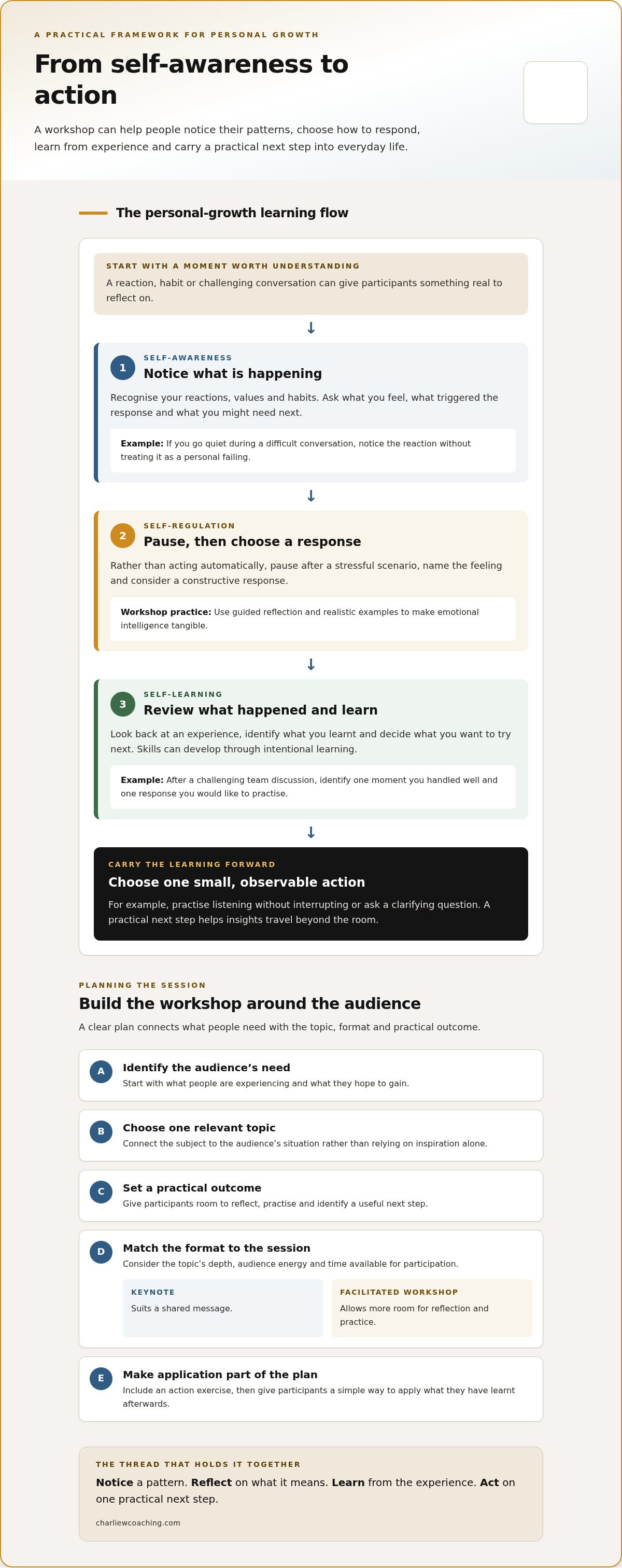
Self-awareness, self-regulation, and self-learning
Andrew Bryant frames self-leadership around three competencies: self-awareness, self-regulation and self-learning. Together, they provide a practical structure for personal development.
Plan a workshop by identifying the audience’s need, choosing one relevant topic and setting a practical outcome. Build in time for reflection and an action exercise, then give participants a simple way to apply what they have learnt afterwards.
Choose the format and duration according to the topic’s depth, audience energy and time available for participation. A keynote suits a shared message, while a facilitated workshop allows more room for reflection and practice.
Emotional intelligence and self-knowledge
Self-awareness starts with noticing your reactions, values and habits. For example, someone who goes quiet during difficult conversations can reflect on what they feel, what triggered the response and what they need next. This builds self-knowledge without treating a normal reaction as a personal failing.
Self-regulation means choosing how to respond rather than acting automatically. In a workshop, a speaker might ask participants to pause after a stressful scenario, name the feeling and consider a constructive response. Look for sessions that make emotional intelligence tangible through guided reflection, realistic examples and skills participants can practise.
Together, these competencies help people recognise patterns and respond more intentionally. A speaker should present them as learnable practices, not fixed personality traits. This distinction can make self-improvement feel approachable, especially for people balancing professional pressure with personal change.
Personal growth and self-improvement
Self-learning completes Bryant’s framework: participants review what happened, identify what they learnt and decide what to try next. A growth mindset is the belief that intelligence and skills can develop through intentional learning. This gives a personal-growth session a clear direction: notice, reflect, learn and take action.
After a challenging team discussion, for example, a participant might identify one moment they handled well and one response they want to practise. The next step could be listening without interrupting or asking a clarifying question. Small, observable actions help attendees carry insights beyond the room.
When choosing a speaker, consider whether their topics connect self-knowledge with everyday decisions. An author promoting a book or a founder sharing a career story may offer a compelling perspective, but the session still needs to serve your audience. Ask what participants will reflect on, practise and take away. A keynote can introduce ideas, while interactive exercises help people explore their own experiences and build resilience through considered action.
Focus the workshop on a real audience need rather than trying to cover every personal-development theme. A clear outcome, a reflective exercise and one practical next step can give participants a meaningful starting point. The speaker’s ability to guide that process matters as much as the subject.
Building habits and finding purpose
A personal-growth session can inspire change, but purpose becomes clearer through specific choices. Tana Goertz’s project began with a list of 100 things she wanted to do to change her life. The example offers a useful prompt: write down what matters, then choose one meaningful action. A speaker can help participants move from broad ambition towards steps connected to their own priorities.
Invite attendees to turn an intention into a repeatable habit. For example, someone who wants to feel more confident at work could practise sharing one idea during a team meeting. The action is manageable and specific enough to notice. This gives motivational content a practical focus, rather than leaving participants with inspiration that fades after the event.
Purpose need not arrive as one defining discovery. A participant might compare what gives them energy with what feels important, then identify one change to explore. A speaker could use a values exercise, written reflection or paired discussion to make this process concrete. Choose a session that makes room for different experiences instead of presenting one path to success.
To help participants shape a habit during the workshop, invite them to:
- Name one priority, such as having more focus during a busy working day.
- Choose a clear action, such as setting aside uninterrupted time for a key task.
- Decide when to try it and how to reflect on the experience afterwards.
These strategies can work in a corporate setting or a personal-development event. For example, a team could identify a behaviour that supports better collaboration, then choose an action to practise in its next meeting. The speaker guides reflection and helps participants see the connection between personal values and daily choices.
Consider how a speaker handles mental wellbeing alongside habit-building. A personal-growth workshop can make space for reflection and encourage practical self-development, but it shouldn’t frame every challenge as a mindset problem. A bestselling author may offer a memorable story, while a motivational speaker may bring energy to the room. Choose someone whose approach respects the topic and gives participants useful ways to think about their next steps.
Connect the session to follow-through. Ask participants to write down one action, what might get in the way and how they will adapt if plans change. For instance, someone who misses a planned moment of reflection could choose another time that fits their routine. This keeps progress flexible, purposeful and grounded in real life.
Choosing a personal-growth speaker for an audience
Start with your audience’s needs, not a famous name. A keynote speaker should connect their subject, style and experience to your event’s purpose.
The fee for a speaking engagement depends on the event format, preparation and travel requirements. Define your priorities before requesting a quote, so the scope of the booking reflects what your event needs.
Watch for sweeping promises of transformation, unclear workshop outcomes or pressure to buy additional products. A speaker should explain their approach plainly and respect emotional boundaries, especially when discussing personal experiences.
The right speaker depends on your event format, audience and subject. Consider both in-person and virtual sessions, then assess each option against what your audience needs.
Prepare a short brief before approaching speakers. Describe who will attend, what they are working through and what you hope they will take away. An entrepreneur’s event might focus on confidence during change, while a corporate leadership session may centre on communication. Clear priorities help you distinguish a relevant speaker from a polished but mismatched presentation.
Use these steps to compare candidates consistently:
- Define the outcome. Choose one purpose, such as helping attendees identify a next career step.
- Match the format. Decide whether your programme needs a keynote, discussion or interactive workshop.
- Review relevant experience. Look for examples tied to your audience, rather than fame alone.
- Explore the method. Ask how the speaker turns ideas into reflection, practice or follow-up action.
- Assess the tone. Consider whether their delivery suits the emotional context of the event.
- Clarify the scope. Align preparation, travel, timing and participant involvement before booking.
An author may bring a distinctive perspective, but publication alone does not show how they will engage your particular audience. Look for a clear connection between their subject and your goals. If you are considering a speaker whose work includes coaching, distinguish a group learning session from individual support: each has a different role in a programme.
Compare the experience attendees will have, not just the speaker’s biography. A thoughtful fit gives people relevant insights and room to consider their next step. That is more useful than choosing a familiar name for its own sake.
What does a personal growth workshop speaker do?
A workshop speaker on personal growth turns a topic into a guided learning experience. They prepare content, lead activities and help participants connect ideas with choices they face at work or home.
Before the event, the speaker aligns the session with your audience and its purpose. A group facing workplace change, for example, may need exercises about confidence and decision-making. The speaker can shape examples around that context, then choose a format that gives people room to listen, reflect or contribute.
During the workshop, the speaker guides participants through a sequence such as:
- Introduce the theme. A short story or idea gives the group a shared starting point.
- Invite reflection. A prompt helps each person connect the theme to a real situation.
- Practise an approach. Participants might rehearse a conversation or map possible next steps.
- Capture learning. Each person records one useful insight and an action to consider.
A session about self-confidence could ask participants to recall a moment when they contributed effectively. They might identify what helped, such as preparation or asking a clear question. This makes the topic personal without requiring anyone to share private details. A skilled speaker sets a respectful tone and offers different ways to take part.
The speaker’s role also includes adapting to the room. If a discussion about career change raises questions, they can pause to clarify the exercise before moving on. They can invite written reflection for people who prefer not to speak publicly. These choices keep the session focused and make it accessible to people with varied personalities and experiences.
A workshop speaker does more than deliver a polished talk. They connect ideas with practice, guide discussion and make space for participants to draw their own conclusions. A coaching conversation, by contrast, usually focuses on an individual’s circumstances and goals. Organisers can help set clear expectations by outlining the session’s topic, format and intended takeaways.
After the session, a useful close gives attendees a way to carry learning into daily life. For instance, participants could note one action they want to try and what might help them follow through. If you’re planning an event around confidence, change or leadership, discuss a personal growth event as a next step.
Charlie Whalley Coaching: Life & Leadership Coaching
Charlie Whalley Coaching offers Life & Leadership Coaching for people seeking greater confidence, clarity or direction through personal and professional change. Career Transition Coaching can help you reflect on what matters and consider your next step. For organisers planning a development session, Speaking & Events includes keynote presentations and interactive workshops on leadership, mindset and personal growth.
Choose the support that fits your situation. Leadership coaching can help you work through challenges in your role, while life coaching offers space to explore broader personal goals. Kids Coaching is a separate offering for children and young people.
If you’d like to explore what fits, book a discovery call with Charlie Whalley Coaching.
Take the next step with confidence
The right workshop speaker for personal growth gives your audience space to reflect, find fresh direction and consider a practical next step. An event need not solve everything. A thoughtful session can help people notice what matters to them and decide where to focus.
If your next step involves building confidence, developing as a leader or finding direction through change, Charlie Whalley Coaching offers Life & Leadership Coaching and Career Transition Coaching. Kids Coaching supports children and young people with resilience and self-confidence.
You don’t have to have every answer before exploring what might help. A conversation can be a calm place to consider your goals and the kind of support that feels right. Contact Charlie Whalley Coaching to start that conversation, and take your next step at a pace that feels manageable.
Frequently Asked Questions
What’s the difference between a leadership speaker and a motivational speaker?
A leadership speaker focuses on how people guide teams, make decisions and handle responsibility. A motivational speaker aims to encourage belief, energy or renewed effort. The styles can overlap: a session for new managers, for example, might combine encouragement with practical ways to approach feedback. Choose according to the change you want attendees to consider, not just the label attached to the speaker.
What topics do personal growth workshop speakers cover?
Personal-growth speakers may explore confidence, values, communication, resilience, emotional intelligence, career change and everyday habits. The right topic depends on the audience’s situation. A group adjusting to new responsibilities might benefit from exploring confidence and communication, while people considering a career shift may want to reflect on their strengths and values. A focused topic helps attendees connect the session with decisions they face.
How do I find and choose a personal growth workshop speaker near me?
First decide whether your event needs an in-person or virtual session, then assess speakers by subject and audience fit. Charlie Whalley Coaching delivers Speaking & Events for corporate teams, community organisations and educational events, in person or virtually. The event format and audience context can help shape a relevant session. Focus on relevance rather than distance alone.
How do personal growth speakers compare with life coaches and motivational speakers?
A personal-growth speaker guides a group through ideas or activities, while a life coach works with an individual’s goals and circumstances. A motivational style can be part of either format. Charlie Whalley Coaching’s one-to-one Life & Leadership Coaching supports professionals and leaders with self-awareness, confidence and change. Consider whether you need shared learning or focused personal exploration.
What questions should I ask before booking a workshop speaker?
Ask how the speaker will adapt the session to your audience, what participants will do and what useful learning they will take away. You could also ask how personal stories will be handled, whether attendees can participate without speaking publicly and what preparation the speaker needs from you. These questions clarify the experience and help you judge whether the planned session suits your event.