
Children’s life coaching for wellbeing and resilience
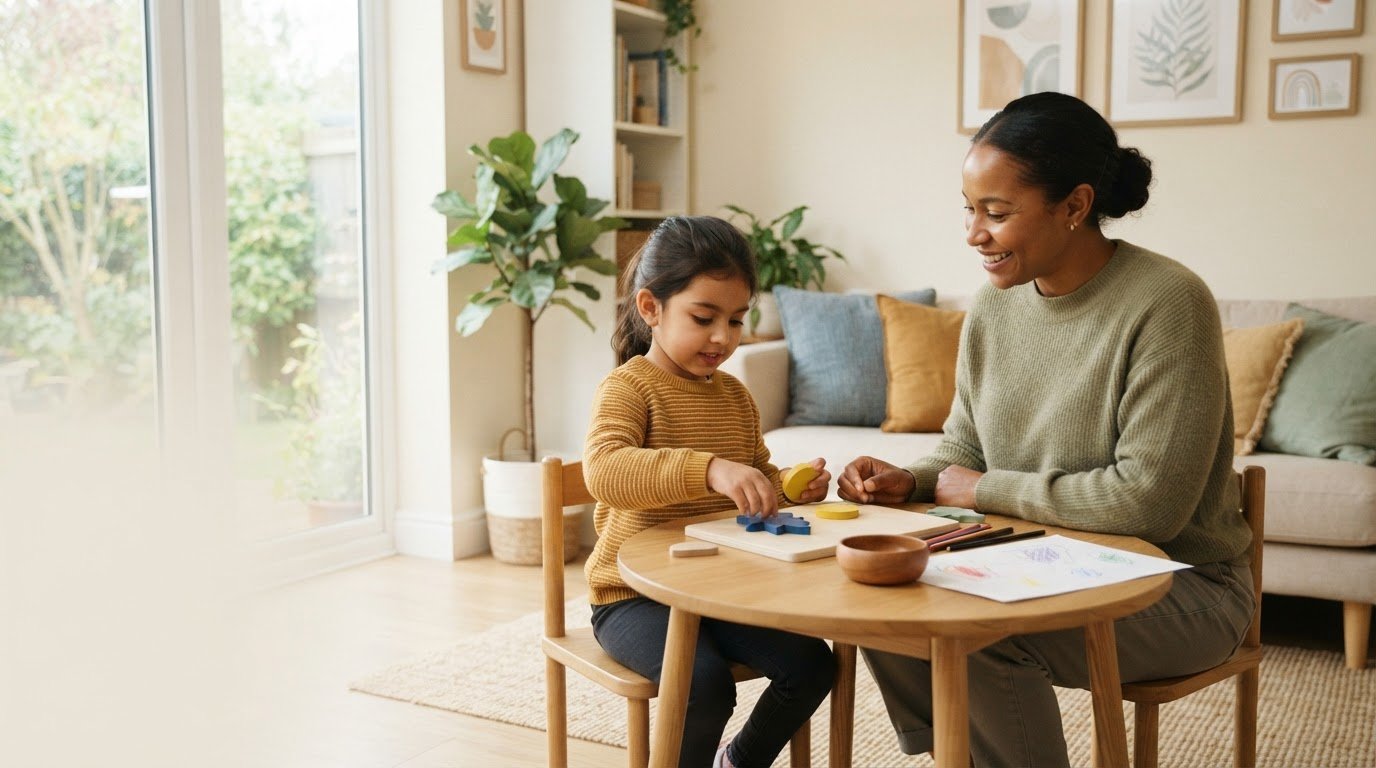
Children’s life coaching gives a child space to build self-awareness, confidence and practical ways to handle everyday challenges. A children's life coach uses age-appropriate conversations and activities to help a child explore feelings, recognise strengths and choose their own next steps. The focus is on developing skills and agency, not expecting a child to manage everything alone.
If you’re supporting a child through worries, change, friendship difficulties or a dip in confidence, it’s natural to want help that feels encouraging rather than pressuring. Coaching can give a child room to think and practise new approaches at a pace that suits them.
This article explains what coaching for children can involve, how it differs from mentoring, and how it may support wellbeing, resilience, communication and healthy habits. You’ll also see what age-appropriate coaching can look like and when it may be a useful next step for your family.
Key Takeaways
- Learn how child-focused coaching can build confidence and resilience by helping children notice their strengths and practise practical ways to handle challenges.
- Explore how everyday habits, supportive communication and a sense of belonging can contribute to a child’s wellbeing.
- See why coaching methods work best when they reflect a child’s age, personality and developmental needs.
- Understand the difference between coaching and mentoring, and how each approach can help a child reflect, learn and move forward.
- Discover how Kids Coaching may offer a supportive next step when a child would benefit from space to explore their own goals and solutions.
What Is Life Coaching for Kids?
Life coaching gives children structured space to understand challenges and practise everyday skills. A children's life coach encourages age-appropriate agency, helping a child recognise their choices without expecting them to be completely independent.
Confidence and self-esteem
A child who says, “I’m no good at school,” may benefit from exploring what happened before that thought arose. A coach can help them identify strengths, notice their effort and choose a manageable next step, such as asking for help with a difficult task. This makes confidence something the child can practise, rather than a label they have to live up to.
Look for approaches that let children describe their experiences and recognise progress in specific situations. A child might record times they contributed an idea, tried again after a mistake or spoke to a classmate. These examples can build self-esteem through evidence of effort, not comparisons with siblings or peers. A children's life coach can encourage this reflection without deciding what confidence should look like for the child.
Life skills and leadership
Life skills help children manage everyday decisions, relationships and responsibilities. In coaching, a child might practise breaking a school project into smaller tasks, explaining what they need or deciding how to respond to a disagreement. These approaches develop awareness and ownership while leaving room for adults to provide suitable support.
Leadership doesn’t have to mean directing others. A child can practise it by taking turns, listening to a friend’s idea or choosing a helpful role in a group activity. Focus on how the child makes decisions and communicates, rather than whether they seem confident in every setting.
Growth mindset and resilience
A growth mindset helps children see a setback as a chance to learn, not proof that they cannot succeed. After a friendship disagreement, for instance, a child could consider what they felt, what they might say next time and which approach feels respectful. This reflection supports resilience by helping them find practical ways to navigate difficulty.
Resilience doesn’t mean staying cheerful or coping alone. It can mean naming frustration, asking a trusted adult for support and trying another strategy after a disappointment. A coach can help a child notice the steps they took, such as returning to a task after an error, and identify what they learned.
Coaching issues and session format
A children's life coach may support concerns such as low confidence, motivation, negative self-talk, emotional regulation, peer relationships, decision-making, everyday stress or change. A child who finds it hard to join playground games, for example, could explore what feels difficult, practise an opening phrase and reflect on how it went.
A session usually centres on the child’s chosen concern, with guided conversation, activities or reflection helping them consider possible next steps. Coaching is not therapy, counselling, discipline or advice-giving; its focus is building skills. Session and programme lengths vary, so there is no single typical duration that applies to every child. The child’s goals and the coaching structure shape how long the work continues.
Eating, sleep, exercise, leisure, communication, education, and support
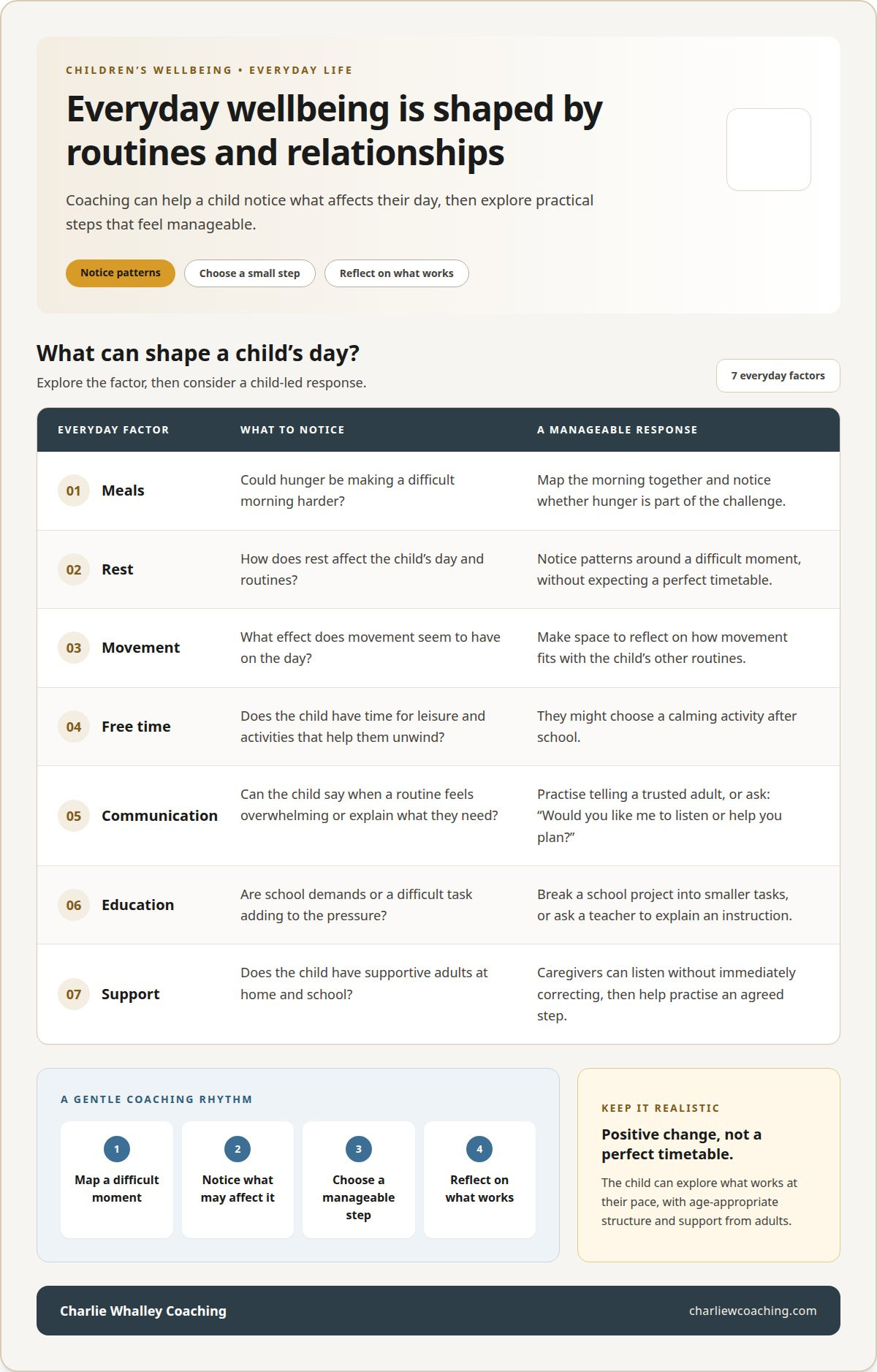
A child’s wellbeing is shaped by everyday routines and relationships, not one isolated habit. Coaching can help a child notice how meals, rest, movement, free time, school demands and communication affect their day. They might map a difficult morning, for example, and identify whether rushing, hunger or worry makes getting ready harder.
Practical steps should feel manageable. A child could choose a calming activity after school, prepare their school bag before bed or tell a trusted adult when a routine feels overwhelming. Coaching can help them reflect on what works, while parents and caregivers provide age-appropriate structure. The aim is realistic, positive change, not a perfect timetable.
Working with parents and caregivers
Caregivers can support progress by listening without immediately correcting, then helping the child practise an agreed step at home. If a child wants more confidence speaking up, for instance, a parent could let them choose a weekend activity and explain their preference. Communication between adults can help the child receive consistent encouragement at home and school.
Before coaching starts in the United States, agree on consent, the child’s willingness to take part, parental involvement and privacy boundaries. Clarify what stays between coach and child, what may be shared with caregivers, and how serious safety concerns are handled. These expectations should be explained in language the child understands.
Anxiety, anger and family support
A child experiencing anxiety might practise naming what feels worrying and choosing a small next step, such as asking a teacher to explain an instruction. A child who gets angry after a disagreement could identify early signs of frustration and rehearse words for requesting space. Coaching can support reflection and everyday skills, while persistent or intense distress calls for appropriate clinical support.
Family support matters because a child’s difficulties can affect siblings, routines and communication between parent and child. A caregiver might ask, “Would you like me to listen or help you plan?” This gives the child room to express what they need without turning every conversation into a correction or lecture.
Choosing supportive, respectful coaching
When choosing a coach, look for recognised coach training, an understanding of child development, a clear ethical code and regular professional supervision. Discuss the child’s goals, session approach, caregiver role and privacy boundaries before beginning. A good fit means the child feels heard and understands what coaching can and cannot address.
For gender-affirming support, notice whether the coach respects the child’s chosen name, pronouns and description of their own experience. Communication should not pressure a child to disclose personal information or adopt someone else’s expectations. Warning signs include promises to fix a child, shaming language, demands for secrecy from the child or unclear boundaries around parent involvement.
Child development and age-appropriate coaching methods
Children understand feelings, choices and consequences differently as they grow. Effective coaching adapts its language, activities and pace to the child’s development.
Age-appropriate coaching methods
The prefrontal cortex supports reasoning, impulse control, perspective-taking and self-regulation, and continues developing into early adulthood. In a coaching conversation, this means a child may need help breaking a challenge into manageable steps rather than being asked to plan everything independently.
For a younger child, a coach might use a story or drawing to explore a friendship difficulty. An older child may prefer guided questions and reflection about the same situation. Look for methods that invite the child’s own thinking and match their communication style and ability to concentrate.
Age-appropriate practice makes abstract ideas easier to use. A coach could help a child identify a feeling, notice what happened just before it and choose a response to try. After feeling left out at school, for example, the child might practise asking to join a game. This connects reflection with everyday life.
Behaviour coaching methods
Child behaviour coaching explores what may sit behind a behaviour, then helps the child practise another response. If a child interrupts when frustrated, the coach might help them notice early signs, pause and practise a phrase such as, “Can I have a turn next?” The aim is skill-building, not blame or punishment.
Coaching approaches may draw on Cognitive Behavioural Therapy, Social Psychology, Positive Psychology, Emotional Intelligence and Neuro-Linguistic Programming. These are different frameworks, and no single method suits every child. A useful session connects its approach to a real goal, such as recognising an unhelpful thought and trying a more balanced way of thinking.
Parents can look for a clear explanation of the method and how progress will be discussed with the child. The child might agree to practise a strategy between sessions, then reflect on what happened next time. This helps them see how their actions can influence situations while keeping expectations realistic and supportive.
Good coaching respects boundaries. It is non-clinical and non-diagnostic, focusing on learning, reflection and practical behaviour skills rather than diagnosing a condition. If a child needs clinical assessment or treatment, understanding this distinction helps families identify appropriate support.
Children’s happiness and resilience
Happiness doesn’t mean feeling cheerful every day. A child can feel disappointed about a cancelled plan and still find comfort, connection or meaning elsewhere. Resilience means responding to challenges, seeking support and recovering over time. Coaching can help children notice these emotional shifts without treating difficult feelings as failures.
A practical coping method starts with naming what is happening. A child who feels overwhelmed before a performance could identify the feeling, notice where it shows up physically and choose a helpful action. They might pause to breathe, talk with a trusted adult or prepare an opening line. The aim is to build options the child can use in real situations.
Reflection can turn a difficult moment into an opportunity to learn. After losing a board game, for example, a child could describe what felt unfair, consider what they can control and decide whether to try again. This supports cognitive flexibility, helping the child explore another way to interpret an event rather than getting stuck on one response.
Perseverance isn’t the same as pushing through every challenge. A child attempting a difficult recipe might follow one step at a time, ask for help with a confusing instruction or take a break when frustration rises. Each choice shows persistence alongside self-awareness. Coaching can help children recognise when to continue, adapt their approach or seek support.
Caregivers can reinforce these skills with specific, calm observations. Instead of saying, “You’re always brave,” a parent might say, “You felt nervous, then told me what you needed.” This recognises an action the child can repeat. A short evening check-in can also invite reflection: what felt hard today, what helped and what might you try next?
Children’s happiness also grows through connection and contribution. A child who enjoys drawing might make a card for a relative, while another may feel included by helping prepare a family meal. These activities let children share interests, build relationships and find purpose beyond achievement or praise.
Progress often shows up in small, concrete changes. A child may return to a challenging task after a pause, use words instead of withdrawing or ask for support sooner. Adults can notice these moments without expecting improvement every day. If distress persists or disrupts daily life, coaching alone may not meet the child’s needs, and clinical support may be more appropriate.
Children’s life coaching and mentoring
Coaching and mentoring can both encourage children, but they take different approaches. A mentor may share experience, suggest ways forward or model a skill. Coaching helps a child think through a situation and find their own next step. If a child feels left out at school, for example, a coach might ask what they have tried and what they’d like to try next.
This distinction matters because learning is more useful when children can apply it themselves. In kids life coaching, an adult doesn’t simply provide a script for every difficulty. They can help a child explore possible responses, consider their effects on others and choose one to practise. The child remains part of the decision rather than being told what success must look like.
Mentoring may suit a child who wants to learn a specific skill from someone else’s experience. A young person joining a school club, for instance, might benefit from seeing how an experienced member welcomes newcomers. Coaching may suit a child who understands the situation but feels unsure how to respond. The approaches can complement each other when their purpose is clear.
A coaching conversation might follow a simple sequence: describe the situation, identify what matters, explore options and choose a practical action. A child worried about speaking in class could prepare a question beforehand, then reflect on what happened afterwards. Guided conversation, stories, activities and reflection can make learning accessible and connect ideas to everyday life.
Parents can support this work by noticing effort without taking over the child’s choices. If a child agrees to invite someone to play, a parent might ask afterwards what felt comfortable and what felt difficult. This can help the child recognise useful learning, even if the interaction didn’t go as hoped. Empowerment means having a voice and developing agency, not being left to manage alone.
If choosing between approaches, start with the child’s goal. Do they need someone to demonstrate a skill, or space to examine their own thoughts and options? Coaching focuses on skill-building and self-directed thinking, not clinical diagnosis or treatment. When a concern involves persistent distress or requires clinical care, coaching alone may not address the child’s needs. A practical change the child recognises as their own is a useful sign of progress.
Charlie Whalley Coaching: Life & Leadership Coaching
Charlie Whalley Coaching offers Kids Coaching for children who could benefit from space to reflect, build confidence and practise practical skills. It may suit a child working through everyday challenges and ready to explore their own thinking. The focus is supportive personal development, not clinical therapy or diagnosis.
A first step is to talk about what your child is experiencing and what they hope to work towards. This can help you consider whether coaching suits their needs. If you’d like to explore Kids Coaching, arrange a free discovery session with Charlie Whalley to discuss your child’s goals and whether there’s a good fit.
Choose a supportive next step
Your child doesn’t need a perfect plan before taking a first step. Begin with a situation they’d like to feel more confident handling, then ask what support might feel useful. Their perspective matters: it can help you decide whether a children's life coach is a suitable partner for practising skills and exploring personal goals.
As you consider what comes next, keep your child involved in the decision. A calm conversation about what coaching is, what they hope might change and what questions they have can make the process easier to understand. You can also discuss how their privacy and your role as a parent will be handled before sessions begin.
Charlie Whalley Coaching can be a next step if your family would like to explore coaching for a child. A conversation can help you consider the child’s goals and whether this approach feels right for your circumstances. There’s no need to have every answer ready.
Contact Charlie Whalley Coaching to explore the next step. Small, thoughtful beginnings can open space for growth.
Frequently Asked Questions
What does a children's life coach do?
A children's life coach helps a child work towards personal goals through structured conversations and practical activities. A child preparing for a school change, for example, might identify what they want to feel more ready for, then choose a small action to try. The coach helps them reflect on what they learned and choose a next step. The child takes an active part rather than simply receiving a plan made by an adult.
What ages can benefit from coaching?
There isn’t one age that suits every child. Readiness depends on development, communication and willingness to take part. One child may engage through drawing or storytelling, while another may prefer talking through a specific goal. Consider whether your child can express what they’d like help with, even in simple terms. Their comfort with the approach and the coach’s ability to adapt activities matter more than age alone.
How is coaching different from a child therapist or counsellor?
Coaching is non-clinical and non-diagnostic, while therapy or counselling may address clinical mental health needs. A coaching conversation might help a child plan how to approach a new activity; it isn’t a mental health assessment or treatment. If your concern involves diagnosis or clinical care, coaching isn’t a substitute. Families may use coaching for practical development alongside other appropriate support, with clear roles for each professional.
What qualifications or certifications should a children's life coach have in the United States?
No single credential, including accredited coach training, fully qualifies someone to work with children. Look for recognised coach training, knowledge of child development, a clear ethical code and boundaries around the coach’s role. You can also ask about professional membership, ongoing supervision and continuing development. Ask who provides the coach’s insurance, and how they protect the child’s wellbeing and explain the coaching process to both child and parent.