
Inspirational Speaker for Organisations: Topics and Formats

A memorable speaker does more than tell an inspiring story: they help your people see a meaningful next step. Choosing an inspirational speaker for organisations means matching the message to what your team is experiencing, whether the aim is to strengthen leadership, explore resilience or encourage fresh thinking.
It’s understandable to want an event that feels uplifting without losing touch with the realities of work. The right topic and format can make a session relevant, whether you’re bringing people together in person or online. No single format suits every organisation.
This guide explains how to choose a topic that fits your goals and what different formats can offer, from a keynote to an interactive session. You’ll also learn what helps in-person and virtual events engage their audiences, what can affect speaking fees, and which details shape the booking process. With a clear sense of your purpose, audience and event setting, you can make a considered choice and create an event that leaves people with ideas they can take into their work.
Key Takeaways
- Match the speaker’s focus to your organisation’s needs, whether that means leadership, resilience or workplace wellbeing.
- Choose an in-person or virtual format that fits your audience and gives people a clear way to engage.
- Make the booking process smoother by defining your event’s purpose, audience and practical requirements early.
- Understand how the speaker’s brief, format and event arrangements can influence the fee.
- Decide whether a keynote, workshop or combination of formats best supports the outcome you want.
Speaker topics including leadership, resilience, and mental health
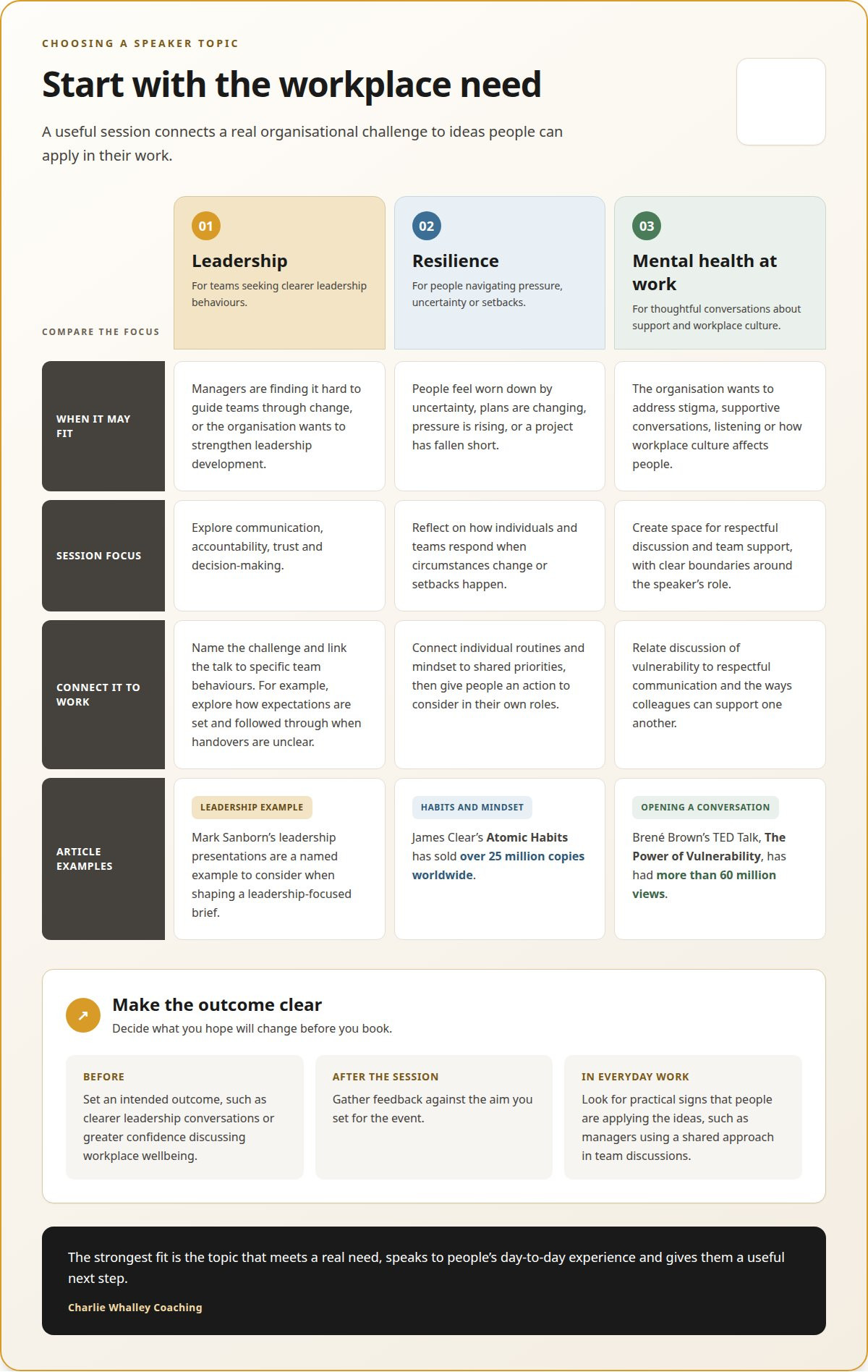
A useful speaker topic starts with a real organisational need, not a broad promise to inspire. If managers are struggling to guide teams through change, leadership development may be the right focus. If people feel worn down by uncertainty, a session on resilience can explore how individuals and teams respond to setbacks. An inspirational speaker for organisations should connect the topic to everyday decisions, so people leave with ideas they can apply at work.
Leadership and high-performance talks can explore communication, accountability, trust and decision-making. Mark Sanborn’s leadership presentations offer a named example to consider when shaping this theme: the event brief can identify the leadership challenge, then connect the presentation to specific team behaviours. For instance, if handovers are unclear, a speaker might prompt leaders to consider how expectations are set and followed through. Motivational speaking has greater value when it supports leadership development with relevant strategies, rather than relying on enthusiasm alone.
Resilience sessions can help teams reflect on how they respond when plans change, pressure rises or a project falls short. James Clear’s Atomic Habits has sold over 25 million copies worldwide, showing how a selling author can bring practical ideas about habits and mindset into a wider conversation. For an organisation, the useful question is how individual routines connect to shared priorities. A speaker can use examples to invite reflection, then give the audience a clear action to consider in their own roles.
Mental health at work calls for care and clear boundaries. A speaker can focus on stigma, supportive conversations, listening and the ways workplace culture affects people’s experiences, without presenting a keynote as clinical care. Brené Brown’s TED Talk, The Power of Vulnerability, has more than 60 million views. Its title illustrates how a talk can open discussion about vulnerability; organisers can make the session more relevant by linking that discussion to respectful communication and team support.
How can organisations measure the impact of an inspirational speaker? Set an intended outcome before booking, such as clearer leadership conversations or greater confidence discussing workplace wellbeing, then gather feedback against that aim. Afterwards, look for practical signs that people are applying the ideas, such as managers using a shared approach in team discussions.
For leadership and high-performance teams, agree on the behaviour the event should encourage, such as giving constructive feedback or clarifying responsibilities. The speaker’s examples, audience activities and closing strategies can then reinforce that focus. A podcast or follow-up discussion may extend reflection, but the event still needs a clear purpose and a message suited to its audience.
How an inspirational speaker can create engaging in-person and virtual audience experiences
An engaging event gives people a reason to listen, reflect and act. A keynote speaker can connect the message to the audience’s workplace, using relevant rather than generic examples. For instance, a session about change might invite employees to consider how a new process affects their daily decisions. The speaker’s background matters too: an entrepreneur may bring first-hand experience of building a business, while a specialist can offer knowledge of a particular field. The best fit depends on what your audience needs to understand, feel or do after the event.
A speaker with change-management expertise can offer a useful perspective to organisations facing transitions. They might make change the central theme, then connect it to familiar moments, such as taking on new responsibilities or communicating uncertainty. That makes the message specific to employees’ experience, rather than treating change as an abstract concept. When planning, define the audience, workplace context and intended action. These details help the speaker shape examples and language around the people in the room.
At an in-person event, engagement can come through live questions, paired discussion or a short reflection exercise. For a virtual audience, the speaker can use chat prompts, polls or moderated questions to invite participation. A simple sequence works well: introduce a relatable example, offer a useful idea, then invite people to apply it. The format should support the message, not distract from it. A clear introduction and accessible visuals also help remote attendees follow the keynote.
What are the pros and cons of hiring a motivational speaker versus an industry expert? A motivational speaker can bring energy and a memorable perspective, while an industry expert can offer subject-specific insight and practical context. The right choice depends on whether your event needs to shift attitudes, deepen understanding or achieve both.
Technical and logistical details should be agreed with the speaker in advance, including room layout, sound, presentation equipment, accessibility and audience participation. The United States Environmental Protection Agency advises organisations hosting a speaker to plan for a laptop, overhead projector, computer speakers, large-format easel paper, markers and any additional materials requested by presenters. The U.S. Bureau of Labor Statistics notes that planners arrange meeting space and support services such as catering and interpreters. For virtual events, discuss the platform, screen-sharing, moderation and how audience questions will reach the speaker.
Before the event, the speaker and organiser can align on the run of show, the key message and the transition between presentation and discussion. A practical example might be a short keynote followed by questions gathered from employees beforehand. That gives quieter participants another route into the conversation. For a blended audience, plan how people in the room and online can both contribute, rather than allowing one group to become observers. A speaker-led event can bring these choices together around your organisation’s purpose.
Guidance for booking a professional speaker
A clear brief helps a speaker shape an event around your organisation’s purpose, audience and intended learning. Start with the outcome, then align the speaker’s expertise, format and practical arrangements.
Booking Motivational Speakers
When choosing a motivational speaker, look beyond an energetic delivery and consider how the message connects with your event. An author, entrepreneur or leadership specialist may bring a distinct perspective, but relevance matters most. Share the challenge your audience is facing, such as maintaining engagement during a demanding period, and discuss how the speaker will make the session specific to that context.
Ask how the speaker balances inspiration with practical learning. For example, will attendees leave with a reflection prompt, a shared framework or a clear action to discuss with colleagues? A professional should be able to explain how their examples support your event’s purpose. If your organisation is international, discuss language, cultural context and whether examples will resonate across teams.
Also agree what the session should and should not cover. A motivational presentation may prompt fresh thinking, but it should not be expected to solve a complex organisational issue on its own. A focused brief helps the speaker shape an encouraging message without losing sight of the realities employees face.
Booking Timelines
Booking timelines depend on the speaker’s diary, the event date and the preparation involved. Begin once you know the event’s purpose and likely format, then share the date, location or virtual setting, audience profile and preferred session length. This gives the speaker the context to discuss fit and identify planning needs.
Allow time for the practical decisions that follow an initial agreement. The organiser and speaker may need to settle the brief, presentation format, technical arrangements, travel requirements and audience participation. An international event can involve extra coordination, such as aligning schedules across time zones or arranging interpretation.
If the date is fixed, make that clear at the first discussion. If the event plan is still developing, identify which details are settled and which may change. This lets both sides plan sensibly instead of treating a provisional agenda as final. Deciding on the event format early can also help focus preparation.
Questions Before Booking
Ask the speaker: “How will you tailor this session to our audience and purpose?” Their answer should connect the proposed message to your organisation’s context, rather than relying on a generic description. Also ask what the audience should take away, how the session will encourage engagement, and what preparation they need from the organiser.
Clarify the practical details together: what equipment or materials are required, how questions will be handled, and how the speaker will adapt the session for in-person or virtual delivery. If the event includes a keynote and discussion, agree how those parts connect. These details help avoid mismatched expectations on the day.
Finally, discuss the speaker’s relevant experience and examples of work with similar themes or audiences. Ask how they approach sensitive subjects and what boundaries they observe. These questions help you judge whether the speaker’s style, expertise and planned contribution suit the event before you commit.
Factors affecting speaking fees
A speaking fee reflects more than the time a speaker spends on stage. For a corporate event, the scope can include preparation, tailoring the message, travel and delivery format. A focused keynote based on an existing talk differs from a presentation developed around your organisation’s priorities. Clarifying what the event needs makes the proposed fee easier to understand.
The fee depends on the event and is outlined after a quote request. Factors include the brief, format, preparation, duration and travel. A motivational speaker addressing a leadership conference may need different preparation from one delivering a general session. If your brief involves a sensitive organisational change, the speaker may need to shape examples and insights around that context. The more specific the contribution, the more important it is to define its scope.
Format matters too. A keynote, an interactive workshop and a keynote followed by a discussion each involve different preparation and delivery. For example, a workshop may need tailored exercises, participant materials or extra planning with event organisers. A virtual session can have different logistical needs from an in-person event. Describe the format clearly, including whether the speaker is expected to answer questions or take part in other activities.
Travel and scheduling can affect the overall arrangement. An event away from a speaker’s usual base may require travel planning, while a tightly scheduled corporate programme can shape arrival and presentation times. Share the location, date and agenda early. If the event is international, explain the time zone and language arrangements, as well as any interpretation needs. These details help establish what the booking involves.
Scope should also cover how the organisation may use the presentation afterwards. For example, discuss whether the event will be recorded, shared internally or used in later learning materials. Intended use can affect the agreement, so clarify it before booking rather than assuming recording is included. Likewise, identify whether selling books, signing copies or taking part in a reception is part of the event. Each activity adds a specific expectation to the speaker’s role.
Ask for a written outline that separates the presentation from any additional arrangements. It should describe the agreed format, preparation, event responsibilities and payment terms. If you want lasting change in team behaviour, keep expectations realistic: a speaker can introduce ideas and encourage reflection, while follow-up action belongs within the organisation. This distinction helps you assess value without treating a keynote as a guaranteed route to wider change.
Compare proposals by fit, not fee alone. A speaker whose experience directly supports your event’s aims may offer more relevant learning than a familiar name with a less suitable message. Consider the audience, the insights you want people to gain and the work involved in tailoring the session. A clear brief gives both sides a sound basis for agreeing the scope.
Keynote and workshop formats
A keynote suits an event that needs one clear message shared with a broad audience. A workshop gives participants more space to explore an idea and connect it to their work. Choose the format by considering what people should understand or do afterwards, rather than assuming a larger session is automatically more effective.
For example, a leadership keynote could introduce a theme such as trust, communication or navigating change. The speaker can use stories and practical ideas to give the audience a shared starting point. This works well when an event brings together people from different teams who may benefit from hearing the same central message. A keynote can also open a conference before smaller sessions explore related themes.
A workshop is better suited to active learning. A speaker might invite participants to examine a workplace scenario, discuss different responses and identify an action to take back to their teams. This structure can help people connect a broad idea to specific responsibilities. It also asks more of attendees than listening, so consider whether the topic, group and event setting support open participation.
Some organisations combine both formats. A keynote can introduce a concept, followed by a workshop where each team applies it to a shared challenge. For instance, a session on organisational culture might begin with a speaker’s perspective, then move into a facilitated discussion about behaviours that strengthen connection. The two parts should be clearly linked, so the workshop develops the keynote rather than simply repeating it.
Format also shapes preparation. A speaker may tailor a keynote around the event’s purpose and audience, while a workshop usually needs a clearer picture of participant roles, group dynamics and intended activity. An organisation’s mission can inform examples and discussion prompts. Share relevant language and priorities in the event brief so the content feels specific without becoming a sales presentation.
In-person workshops make small-group discussion straightforward, while virtual sessions need deliberate ways for people to contribute, such as chat prompts or facilitated breakout conversations. For a hybrid event, plan how remote attendees will participate alongside those in the room. Highly interactive activities need clear instructions and transitions, whether delivered face to face or online.
Before choosing, define the outcome, audience and available event time. A keynote may suit awareness and shared direction; a workshop may suit discussion and application. If you’re considering a combination, agree how the formats support one another and what participants should carry forward. Plan a speaker-led event around the format that best fits your organisation’s aims.
Charlie Whalley Coaching
Charlie Whalley Coaching offers Speaking & Events for organisations seeking a speaker who can connect an event’s message with people’s working lives. If your team is navigating change, building confidence or reflecting on leadership, a well-shaped session can create space for shared insight and forward movement.
When an event points to a wider need for individual or team development, Life & Leadership Coaching may offer a useful next step beyond the session. The coaching can focus on the challenges people are working through, rather than assuming one talk will suit every organisation or resolve every concern.
If you’d like to explore a speaking event for your organisation, contact Charlie Whalley Coaching to discuss what would be helpful.
Turn your event into a meaningful next step
Choosing an inspirational speaker for organisations is an opportunity to create a moment that continues beyond the event. Consider what will help your people carry its message into their working lives, whether that means making space for reflection or opening a conversation about a shared team challenge. The event’s value can grow through the attention people give its ideas afterwards.
Charlie Whalley Coaching delivers speaking engagements and workshops on leadership, mindset, self-limiting beliefs, psychological safety, and giving and receiving feedback. A free discovery conversation can help clarify your organisation’s purpose, audience and direction, so the session is grounded in what matters to your team.
If you’re ready to explore a speaking event for your organisation, contact Charlie Whalley Coaching. A thoughtful next step can help turn a shared moment into meaningful progress.
Frequently Asked Questions
What does an inspirational speaker do for an organisation?
An inspirational speaker helps an organisation bring a message to life through stories, ideas and audience engagement. For example, at a staff event during a restructure, a speaker might present the change from a human perspective and invite people to reflect on how communication shapes their experience. The session can create a shared starting point for discussion, while leaders decide how to carry the conversation into everyday work.
How do organisations choose the right inspirational speaker?
Choose someone whose expertise and style fit your organisation’s purpose and the audience’s current experience. Consider whether your people need a fresh perspective, practical insight or space to reflect. Then discuss how the speaker would adapt an example to your workplace and whether their approach feels right for your culture. A strong fit makes the message easier to connect with, rather than simply impressive on paper.
How far in advance should an organisation book an inspirational speaker?
Start the booking conversation once the event date and purpose are clear. There’s no single lead time that suits every event: the speaker’s diary, preparation, travel and format all affect planning. A tailored workshop or international event may involve more coordination than a straightforward virtual keynote. Sharing the date, location, audience and session aims early gives everyone a clearer basis for planning.