
Ways to help your child build resilience through everyday challenges

Resilience isn’t about shielding children from every hard moment; it’s helping them find their way through one. The American Psychological Association defines resilience as adapting well in the face of adversity, and you can help your child build resilience through supportive relationships and everyday chances to cope, learn and try again.
It’s natural to want to step in when your child feels disappointed, anxious or stuck. Yet children can grow more confident when their feelings are heard and they have room to work through manageable challenges. This article explains why resilience matters and how experience, safe mistakes, healthy risks and age-appropriate choices can help develop it. You’ll also find practical ways to help children name and manage emotions, so difficult moments feel more manageable and asking for support becomes part of moving forward.
Key Takeaways
- Resilience helps children adapt to adversity and keep moving forward, including during stressful events and difficult changes.
- Let children practise skills through manageable challenges and safe mistakes, then talk together about what they learned.
- Encourage healthy risks by offering support without taking over, and show that asking for help is a strength.
- Give children age-appropriate choices and guide them to think through possible solutions to everyday problems.
- Help children name their feelings and try simple calming strategies so they can respond to difficult moments with greater self-awareness.
1. Why is resilience important and how does it help us?
The American Psychological Association defines resilience as adapting well when facing adversity, trauma, tragedy, threats or significant stress. For a child, that might mean finding a way forward after a frightening storm, a disagreement with a friend or an unexpected change at home. Resilience doesn’t mean feeling calm all the time. It means having support and skills to cope with difficult feelings and experiences.
Disasters and stressful times can disrupt familiar routines, leaving children unsure about what will happen next. A child may worry after a severe storm, become quiet during family conflict or struggle when school arrangements change. Caregivers can give clear, age-appropriate explanations and make space for questions. For example, explain what has changed today, what will stay familiar and who will be there to help.
Daily habits can give children steady opportunities to feel connected, heard and supported. Set aside 10-15 minutes of one-to-one time each day without phones or other distractions. A familiar bedtime routine, a shared meal or a regular conversation after school can also create a dependable moment to talk. Ask an open, light-hearted question, such as, “What made you smile today?”
Positive coping strategies are easier to use when children practise them before a difficult moment. When your child feels upset, name the feeling together, then try a simple action such as taking five slow breaths or counting to ten. You could make a small toolkit of strategies your child can remember: breathing slowly, talking to someone they trust, drawing or taking a quiet pause.
Manageable challenges also give children a chance to practise coping. Waiting for a turn, trying an unfamiliar activity or working through a small disagreement can be frustrating without becoming overwhelming. Stay nearby and acknowledge the feeling, then invite your child to choose a strategy. The aim isn’t to remove every source of stress, but to help them experience difficulty with support.
Caregivers influence how children respond by showing how they cope in everyday situations. If you feel stressed after a delayed journey, you might say, “I’m frustrated, so I’ll take a breath and work out our next step.” This shows that difficult feelings can be recognised and managed. It also presents asking for help as a practical option, not something to feel ashamed about.
After a stressful event, return to familiar habits where possible, such as reading together or getting ready for school. Routines can create predictable moments amid change. If your child talks about a frightening experience, listen without rushing to correct their feelings. You might say, “That sounded scary,” then ask what would help them feel supported right now.
Resilience grows through repeated experiences of being supported, trying a coping strategy and taking a next step. A child who can say they feel worried, breathe slowly and ask for company is practising useful skills. Notice those efforts, even when the problem remains difficult. Your recognition helps children see that coping is something they can learn and use again.
2. Building competence through experience and safe mistakes
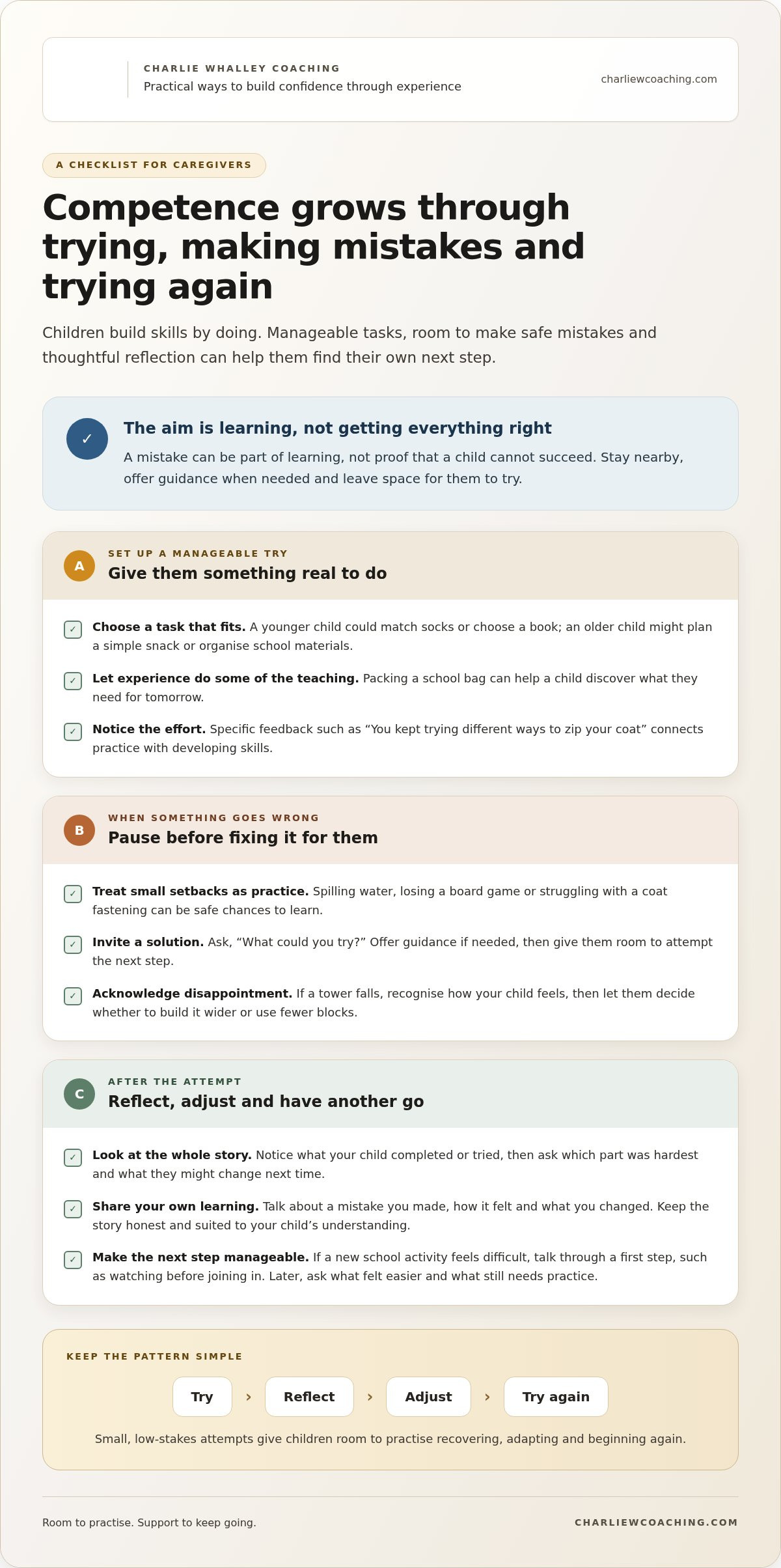
Children build competence by doing, not simply by hearing instructions. A child who packs their school bag can discover what they need for tomorrow. If they forget a book, help them think of a reminder for next time. Give your child manageable tasks and room to learn from the results to help them build resilience.
Safe mistakes are ordinary setbacks with manageable consequences. A child might spill water while pouring a drink, lose a board game or struggle to fasten a coat. Pause before fixing the problem. Ask, “What could you try?” Offer guidance if needed, then give them room to attempt the next step. This shows that mistakes can be part of learning, not proof that they can’t succeed.
After a difficult experience, help your child look at the whole story. If a school project feels disappointing, first notice what they completed or tried. Then ask which part was hardest and what they might change next time. This keeps the conversation open instead of turning a setback into a judgement about their ability.
Your own examples can make mistakes easier to discuss. You might tell your child about a time you misread a recipe, felt frustrated and started again. Explain what you changed, such as checking each ingredient before mixing. Keep the story honest and suited to your child’s understanding. It shows that adults learn from experience, too.
Choose positive experiences that suit your child’s stage and interests. A younger child could help match socks or choose a book, whilst an older child might plan a simple snack or organise school materials. Notice the effort behind each task. Specific feedback, such as “You kept trying different ways to zip your coat,” links practice with developing skills.
When a child doesn’t succeed, resist the urge to make the outcome disappear. If their tower falls, acknowledge their disappointment and invite them to look at its base. They can decide whether to build it wider or use fewer blocks. Small, low-stakes attempts let children practise recovering, adapting and beginning again. They don’t need to win or get everything right to learn how to bounce back.
Experience also helps children recognise what support they need. If a new school activity feels difficult, talk through one manageable first step, such as watching before joining in. Later, ask what felt easier and what still needs practice. These conversations build confidence without demanding instant success. Repeated opportunities to try, reflect and adjust help your child build resilience through their own experience.
3. Encouraging healthy risk-taking and productive struggle
A healthy risk lets a child stretch their abilities without facing unreasonable danger. It might mean joining a new playground game, asking a question in class or trying out for a school play. Encourage the attempt without promising success. Praise their decision to participate, then talk about what your child noticed or learned, whatever the outcome.
To encourage independence, help your child think through a challenge instead of taking it over. If homework feels confusing, ask what they understand, what they could try next and whether they’d like a hint. Offer enough support to keep the task manageable, then let them take the next step. This helps them practise problem-solving whilst knowing you’re nearby.
Children also need to know when to ask for help. Make it clear that struggling isn’t weakness and that asking for support is a useful strategy. For example, a child who can’t resolve a playground disagreement might speak with a teacher. You could ask, “Who could help you handle this?” This helps them identify trusted adults and peers, rather than feel alone.
Supportive relationships with parents, teachers and peers give children safe places to share feelings and try again. A parent can listen after a difficult school day, whilst a teacher can help a child plan how to join a group activity. A kind classmate can make that first interaction feel easier. These connections support mental health by helping children feel seen and able to ask for support.
A growth mindset is the belief that abilities can develop through dedication and hard work. Instead of calling a child “naturally clever” after they solve a puzzle, notice what they did: “You tried a different way when the first piece didn’t fit.” This feedback connects progress with effort and strategy. It can encourage children to take on another challenge, even when success takes practice.
Contribution gives children a meaningful way to use their abilities. Invite your child to set the table, help a neighbour carry groceries with you or welcome a new classmate at lunch. Name the impact: “Your invitation helped them feel included.” The aim isn’t perfect performance. It’s helping children see that their actions can matter to someone else.
Offer help without removing every obstacle. If a child hesitates before a new activity, agree on an approachable first move, such as watching a practice before joining in. Afterwards, ask what felt manageable and what support might help next time. Children can build confidence through effort, connection and achievable challenges, while learning they don’t have to manage every difficulty alone.
4. Helping children understand choice and control
Children can’t control every change, but small decisions help them see where they have influence. If a family move disrupts their routine, offer a choice between two bedtime stories or ask which familiar toy they’d like to pack first. This doesn’t remove the loss or uncertainty. It gives the child a manageable action within a difficult situation.
Parents can support problem-solving by helping children separate what they can change from what they can’t. If a child feels left out at school, listen first, then ask what they’d like to happen next. You might help them consider inviting a classmate to play or speaking with a teacher. Let them choose the first step when it’s safe and appropriate.
Recognising strengths helps children remember what they can draw on during adversity. Point out specific examples before a crisis, such as, “You kept practising your spelling, even when it felt tricky.” You might also ask what helped them settle after a previous change. Linking a strength to a real experience makes it easier for a child to see how that quality could help again.
Offer choices that suit the child’s age and family circumstances. A younger child might choose between two outfits, whilst an older child could help plan a changed journey to school. Keep the options genuine and limited. If neither is possible, calmly explain why and offer another area where they can decide, such as what to bring along.
When children are dealing with stress, bullying, grief or family changes, listen without rushing to fix their feelings. Explain what has happened in clear, age-appropriate language, say what will happen next and agree on one practical source of support, such as a trusted teacher. If a child has experienced trauma, predictable routines and a safe adult can help them feel less alone as they process change.
Notice patterns that suggest a child needs more support. Distress that repeatedly disrupts sleep, school, friendships or everyday activities deserves attention. If your child seems persistently overwhelmed, withdrawn or unable to feel safe, speak with a qualified mental health professional. Share specific observations, such as changes in behaviour at home and difficulties reported by school, to explain what you’re seeing.
Giving a child choices should never mean leaving them to manage a serious problem alone. If bullying continues, work with the school to address it and tell your child which adults are taking action. When a child is grieving, make room for questions and different reactions instead of expecting them to feel better on a schedule. Support and appropriate choices can go hand in hand.
Children may not control a separation, bereavement or move, but they can still have a say in daily details. Ask what would make a new bedroom feel familiar, or which relative they’d like to call. These small decisions don’t remove adversity. They help a child recognise their preferences, strengths and sources of support, while adults remain responsible for safety.
5. Teaching children to identify and manage emotions
When your child is upset, help them recognise the feeling before trying to solve the problem. You might say, “You seem disappointed because the game ended.” Acknowledge why the feeling makes sense, then listen without dismissing it. Naming sadness, anger or worry builds self-awareness, a useful skill when children face challenges at home or school.
Use everyday moments to build your child’s emotional vocabulary. If they slam a book after struggling with homework, try, “Are you frustrated, or are you worried about getting it wrong?” Give them time to respond. If they can’t find a word, offer a simple choice. Recognising difficult emotions won’t make them disappear, but it can help children explain what they need.
To practise calming, invite your child to take five breaths. They can breathe in for four counts, then breathe out for six counts. Try this together when they’re calm, such as before bedtime, so the steps feel familiar when they’re upset. If counting feels difficult, simply breathe slowly side by side. Your steady presence helps make the strategy easier to practise.
A grounding exercise can bring attention back to the immediate surroundings. Ask your child to name five things they can see, four they can touch, three they can hear, two they can smell and one they can taste. They might notice a blue cushion, their jumper and a clock ticking. Let them skip any sense that feels uncomfortable.
When frustration rises, ask your child to rate it from 1 to 10. A low rating might call for a short pause; a higher rating may mean taking space with you nearby. Then ask what could help: a drink of water, a quiet corner or talking through the problem. The number gives children a simple way to communicate intensity.
Show that adults use emotional skills, too. If you feel impatient after a long day, say, “I’m tense, so I’ll pause before I answer.” This models noticing a feeling and choosing a response. It also reassures children that feeling angry or worried doesn’t make someone bad. What matters is learning to express feelings safely and repair hurtful words.
After your child has settled, gently revisit what happened. Ask, “What did you feel in your body?” or “Which strategy helped you feel ready to talk?” A child might notice their hands tightening before an argument, then choose slow breathing next time. Keep the conversation brief and warm. The aim is to build understanding, not test their memory.
Practise these skills during ordinary moments, such as a disappointing result in a board game or a change to weekend plans. Listen, name the emotion and offer a calming strategy before discussing what to do next. With repeated practice, children can learn to notice and communicate feelings, then choose a response that helps them handle what comes next.
Charlie Whalley Coaching: Life & Leadership Coaching
Charlie Whalley Coaching offers Kids Coaching to help children build confidence, understand their strengths and navigate change. It may be a useful next step when everyday encouragement at home isn’t helping your child move forward, or when you’d like them to have a supportive space to explore their goals and challenges. If family changes are affecting you as a parent, Life & Leadership Coaching can help you reflect on your own direction and responses. Coaching is a considered choice, not a sign of failure.
If you’d like to explore whether coaching could support your family, contact Charlie Whalley Coaching.
Keep building confidence, one conversation at a time
There may be days when your child still struggles, even after you’ve listened, encouraged them and made space for their choices. That doesn’t mean you’ve failed. A calm conversation, another chance to try or a reminder that support is available can help keep connection at the centre of your next step.
As you look ahead, notice what your child responds to. Perhaps they open up during a walk, prefer quiet company after school or need time before discussing a change. These observations can help you shape support around your child, rather than expecting one approach to suit every moment. Small adjustments can make it easier to stay connected.
If you’d value a supportive space to explore your child’s confidence and development, coaching may be a useful next step. Charlie Whalley Coaching offers support for children and families working through personal challenges. Contact Charlie Whalley Coaching to discuss whether coaching feels right for your family. Your steady presence matters, and you can keep learning together.
Frequently Asked Questions
Why is resilience important and how does it help us?
Resilience helps children adapt to adversity without expecting them to feel unaffected. It can help them return to everyday activities, communicate what they need and face another challenge after a difficult experience. After a disappointing result, for instance, a child might feel upset and still decide to practise again. Resilience is about adapting, not avoiding difficult feelings.
What does resilience mean in children, and why is it important?
For children, resilience means developing ways to cope with difficulty while staying connected to supportive people. It isn’t a fixed personality trait or a demand to manage everything alone. A child might show resilience by telling a trusted adult that a friendship feels uncomfortable, then accepting support to decide what to do. These skills matter because children encounter changes and setbacks as they grow.
What are age-appropriate ways to help a child build resilience?
To help your child build resilience, match the challenge to their stage and give them a manageable role. A young child might choose a comfort item for an unfamiliar appointment; an older child could prepare questions before meeting a new teacher. Afterwards, ask what they found useful. If a task feels too big, break it into smaller steps and stay available without taking away their chance to participate.
How should parents respond when a child fails, struggles, or makes a mistake?
Respond with curiosity before offering advice. If your child’s science project doesn’t work, acknowledge their disappointment, then ask what they noticed and what they might change. Avoid labelling them as careless or incapable; focus on the specific choice or step instead. If they’re too distressed to reflect, give them time. A later conversation can turn the experience into useful learning.
What evidence-based programmes and resources help children build resilience in the United States?
In the United States, families can explore school-based social and emotional learning, caregiver support and resources for children affected by stressful events. Ask a school counsellor or paediatrician about programmes that teach practical coping, problem-solving and relationship skills. Look for clear descriptions of the programme’s approach and intended age group. A useful resource should support both children and the adults who care for them, rather than expecting a child to cope alone.