
How to build confidence by practicing skills and learning from experience

Confidence doesn’t have to come before action. Often, it grows as you practise, try and discover what you can handle. If you’re wondering how to build lasting confidence, the answer isn’t to become fearless or flawless. It’s to build trust in your ability to learn and respond, even when things feel uncertain.
It’s natural to want confidence before speaking up, taking on a challenge or making a change. But waiting until you feel completely ready can keep you stuck. Real experiences offer something steadier than a burst of motivation: evidence that you can prepare, make mistakes, adjust and keep going.
This guide explores how positive self-talk, reflection, achievable goals, gradual challenges and skill development can help you build confidence over time. You’ll find practical ways to recognise progress, learn from outcomes without judging yourself harshly and develop abilities that matter to you. The aim isn’t perfection. It’s a more dependable belief in yourself, built through experience.
Key Takeaways
- Replace harsh self-criticism with realistic, supportive words that help you focus on what you can do next.
- Record what happened in challenging moments so you can learn from the details, not just label the experience a success or failure.
- Make a larger ambition feel more manageable by choosing a small, achievable goal and noticing each step forward.
- Build your willingness to act by starting with a manageable challenge, then gradually stretching beyond what feels familiar.
- Practise a skill that matters to you and use the progress you make as evidence of your growing ability.
1. Positive self-talk
Confidence is your belief that you can prepare for and handle a situation, such as leading a meeting or learning a new task. Self-esteem is your broader sense of personal worth, which doesn’t have to falter after a disappointing outcome. Courage means taking action despite anxiety. These ideas are connected, but they aren’t interchangeable.
Self-confidence can support self-esteem by helping you recognise your abilities, but your worth isn’t measured by your performance. You might feel unsure about presenting a proposal and still respect yourself if it doesn’t go to plan. That distinction lets you learn without treating one difficult moment as proof that you’re incapable.
Healthy confidence leaves room for preparation, feedback and limits. Overconfidence dismisses useful information, such as a colleague’s concern about an untested plan. Before a challenging conversation, ask yourself what you know, what you need to prepare and what you’re still learning. This balance supports action without pretending you’re certain about everything.
To challenge negative thoughts, write down the exact criticism you hear in your mind. Then ask whether you’d say the same thing to a friend after a mistake. Replace “I always get this wrong” with a believable, evidence-based statement: “I’ve prepared my main points, and I can ask for clarification.” Positive self-talk isn’t pretending everything will work out. It’s choosing words that help you respond constructively.
What habits help build confidence over time? Notice one effort or skill you used each day and describe it specifically, such as “I asked a clear question in the meeting.” Pair self-compassion with a practical next step: acknowledge what felt hard, then decide what you’ll practise before a similar situation. Reflecting this way helps your thoughts include evidence of progress, not just perceived shortcomings.
To face a fear of failure, make the feared outcome specific. If you’re worried about sharing an idea, write down what you think might happen, then prepare a sentence you can use in the meeting. Afterwards, consider what actually happened and what you’d change next time. This turns a setback into information, rather than a verdict on your ability.
When should someone seek professional support for persistent low confidence? Consider speaking with a suitably qualified professional if self-doubt is making everyday decisions, work or relationships difficult, or feels connected to trauma. Support can help you understand what’s maintaining the pattern and explore a manageable way forward. You don’t need to wait until you’re in crisis to ask for help.
2. Recording experiences and learning from outcomes
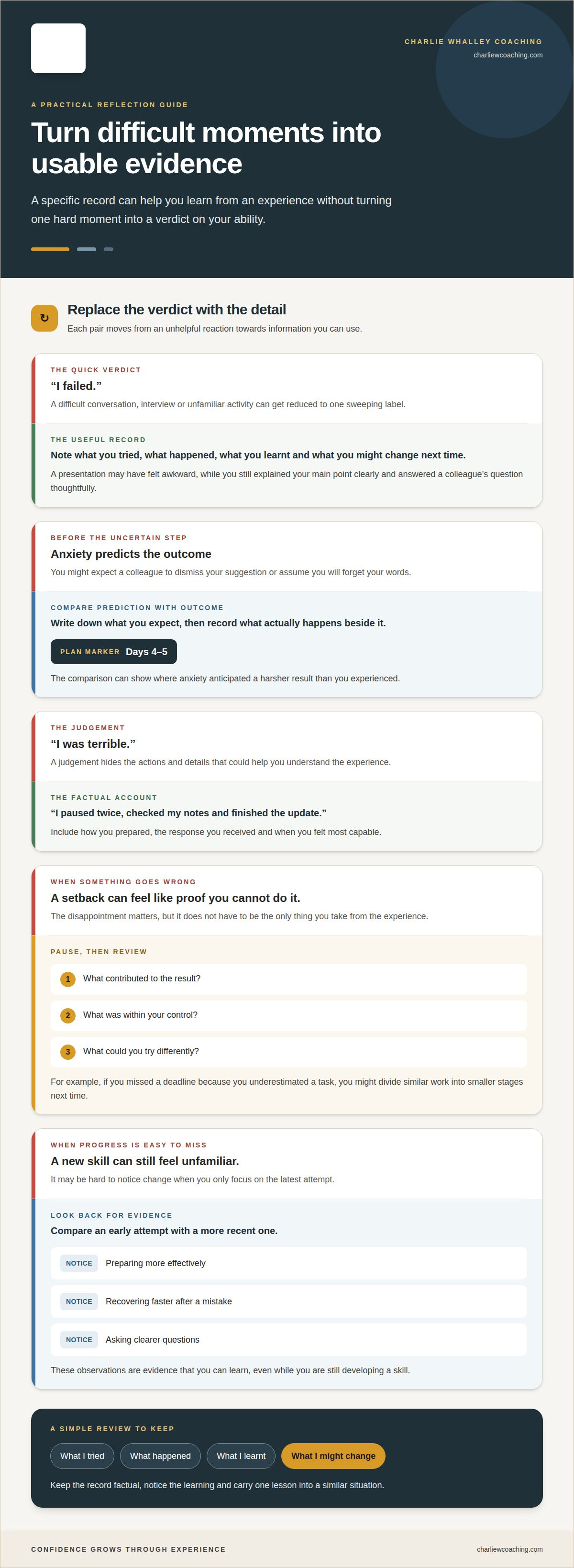
After a difficult conversation, interview or unfamiliar activity, you may remember the experience simply as “I failed”. Recording specific details can give you a more balanced account. Note what you tried, what happened, what you learned and what you might change next time. For example, if a presentation felt awkward, you may still have explained your main point clearly and answered a colleague’s question thoughtfully.
Before taking a step that feels uncertain, write down your prediction. Perhaps you expect a colleague to dismiss your suggestion or assume you’ll forget your words. Afterward, record the outcome beside that prediction. A confidence-building plan recommends taking a first step and noting both prediction and outcome during Days 4-5. The comparison can show where anxiety anticipated a harsher result than you actually experienced.
Keep your record factual rather than judgemental. “I paused twice, checked my notes and finished the update” gives you more useful information than “I was terrible”. Include details such as how you prepared, the response you received and when you felt most capable. These observations help distinguish a specific mistake from a sweeping negative belief about your ability.
When something goes wrong, give yourself time to notice the disappointment before looking for a lesson. Then ask: what contributed to the result, what was within my control and what could I try differently? If you missed a deadline because you underestimated a task, you might divide similar work into smaller stages next time. Learning from failure means using the experience to inform your next decision, not pretending the result didn’t matter.
Keeping a record can also reveal progress that’s easy to overlook. Look back at something that once felt unfamiliar, such as speaking up in a group or using new software. Compare an early attempt with a more recent one. You may notice that you now prepare more effectively, recover faster after a mistake or ask clearer questions. That evidence supports confidence in your ability to learn, even while you’re still developing a skill.
Review your notes regularly and choose one lesson to carry into a similar situation. If an awkward exchange affected a relationship, record what you understood about the other person’s response and how you might communicate next time. Honest observations can gradually replace negative self-talk with a more accurate picture of your actions, setbacks and growing abilities.
3. Setting and achieving small goals
A broad aim such as “be more confident” can feel impossible to act on, especially when work, family and other responsibilities compete for your attention. If you’re working out how to build lasting confidence, start by identifying where you hold back and what action you’d like to take. If you stay quiet in team discussions, for example, aim to share one prepared idea at the next meeting.
Choose a step that challenges you without depending on a perfect result. For example, if you want to speak more comfortably in meetings, write down one point you’d like colleagues to hear, then practise saying it aloud beforehand. “Contribute one thought” is within your control; “make everyone agree” isn’t.
Breaking a larger ambition into manageable actions gives your learning direction. To prepare for a career change, you might list the skills a role requires, then choose one to practise through a relevant activity. Give each step a clear endpoint, such as completing a draft or asking someone for feedback. That way, you can recognise your effort as well as the outcome.
Start small enough to repeat. Waking up 10 minutes earlier is one example of a modest habit to try; another might be setting aside time to prepare a question before a meeting. Continue a small new habit for a month before assessing what it has taught you. Consistency can help you see what fits your routine, rather than judging your ability from one difficult day.
Track your progress in a simple note or calendar. Record the action, when you took it and what you learned. If your goal is to contribute in a meeting, note each attempt and whether preparation helped. Choose the smallest useful confidence-building step you can take within the next seven days. A clear timeframe turns intention into something you can plan.
Recognise achievements specifically, without pressuring yourself to do more straight away. After sharing your idea, you might say, “I prepared and spoke even though I felt nervous.” This self-recognition connects your effort with your growing ability. Part of how to build lasting confidence is noticing the actions you can repeat, rather than waiting to feel completely ready.
Goals should support your wellbeing, not become another measure of your worth. If a step feels too demanding, adjust its size or timing and decide what would make it manageable. Progress can include learning that a particular approach doesn’t suit you. Achievable aims, recognised milestones and thoughtful adjustments help you build confidence through evidence of your own follow-through.
4. Taking manageable steps that gradually increase in difficulty
A situation can feel intimidating before you begin, especially if you expect to stumble or be judged. Instead of waiting for the fear to disappear, choose a small action you can take while feeling nervous. Confidence can grow as you try that step, notice what happens and decide whether you’re ready to move towards a slightly harder one.
Start by choosing a specific situation, naming the feared outcome and writing down a manageable action. For example, if speaking in a group feels difficult, your first step might be to say hello to one person before a meeting. The aim isn’t to perform perfectly. It’s to practise engaging with the situation and notice what you can handle.
Gradual exposure means approaching a fear in steps, rather than avoiding it entirely or forcing yourself into the hardest version straight away. If you hesitate to share ideas at work, you could rehearse a short point alone, discuss it with a trusted colleague, then contribute in a team meeting. Adjust the steps to fit the situation and your readiness.
Everyday practice can be simple and specific. If you avoid making requests, start with a low-stakes example, such as asking a colleague to clarify a task. If setting boundaries feels difficult, practise saying, “I can’t take that on today,” in a situation where the consequences feel manageable. These small actions help you learn that you can communicate clearly, even when a conversation feels uncomfortable.
Keep the next step challenging but achievable. A confidence-building plan suggests trying the same action in a new setting or choosing a slightly harder step during Days 8-10. If you’ve already shared an idea with a colleague, you might try sharing one in a small meeting. Repeating a manageable action can help you prepare for greater challenges without turning progress into a test of courage.
A useful exercise for low confidence is to write down a feared situation, the action you’ll try and what actually happens afterwards. This gradual exposure lets you compare your prediction with the real experience. It doesn’t promise that fear will vanish, but gives you practical information to help decide your next step.
If an attempt feels difficult, respond with compassion rather than criticism. Note what made it challenging, then make your next action smaller, clearer or better prepared. If a conversation becomes uncomfortable, you can pause, return to your point later or maintain a boundary. Confidence grows through thoughtful practice, not by ignoring your limits or pushing yourself into every situation.
5. Building confidence through skill development
Confidence is more grounded when it rests on abilities you’re actively developing. If you’re preparing to lead a meeting, for example, practise opening with a clear purpose, explaining your main point and inviting discussion. Each part gives you something concrete to work on, rather than expecting yourself to feel ready all at once.
Competence, preparation and practice support confidence in different ways. Learning builds your ability; preparation helps you meet a particular challenge; practice lets you use that preparation in real situations. You don’t need to be an expert before taking part. You need a sound next step and a willingness to keep refining your skills.
Choose an ability that matters in your daily life or work, then make practice specific. If writing is important, set aside 30 minutes a day to write and review one piece of work. If you’re preparing for a presentation, practise the opening aloud and notice where your words feel unclear. These exercises turn a broad ambition into actions you can repeat.
Preparation can also ease the pressure of a particular moment. A confidence-building plan recommends preparing the necessary words or skill and practising aloud during Days 2-3. Before a challenging conversation, for instance, rehearse how you’ll introduce the subject and state your main point. Practice won’t control every response, but it can help you feel more prepared to take part.
After trying the skill in a real situation, invite feedback that gives you something usable. Instead of asking, “Was that good?”, ask, “Was my main point clear?” Then choose one adjustment and practise again. A plan suggests asking for specific feedback, adjusting and practising again during Days 11-13. That cycle helps you build on what’s working without turning every attempt into a judgement of your ability.
Developing skills can strengthen more than technical ability. Improving a presentation, learning new software or taking on a role can also call on commitment, resilience, creativity and discipline. These qualities become personal assets: evidence that you can keep learning through challenges, even when progress feels uneven.
You don’t need to excel at everything. Pick one skill that matters, practise it consistently and notice what becomes easier. A new exercise, task or hobby can offer a useful place to begin, provided it genuinely interests you. Explore a more supported approach to your growth if you’d value guidance in choosing a direction and building confidence through practice.
Charlie Whalley Coaching
Charlie Whalley Coaching helps people work through self-doubt, build confidence and navigate personal or professional change. If it’s difficult to turn reflection and practice into steady progress, coaching can help you clarify what matters, recognise your strengths and identify practical next steps. The focus is on your circumstances and the changes you want to make, not a one-size-fits-all plan.
Whether you’re facing a transition, seeking greater confidence in a leadership role or supporting a child, the right guidance can help you move forward with more clarity. You can explore whether coaching together feels like a useful next step, without needing to have everything figured out first.
Contact Charlie Whalley Coaching to start a conversation about building confidence in a way that feels practical and personal.
Choose your next step with confidence
Confidence doesn’t have to feel complete before you begin. You can build it while moving towards something that matters, whether that means taking on a new responsibility, changing direction at work or helping a child trust their abilities. The useful question isn’t whether you feel entirely ready, but what support would help you take your next step.
Charlie Whalley Coaching offers Life & Leadership Coaching, Career Transition Coaching and Kids Coaching. These options support people working through self-doubt in different areas of life, from leadership challenges to career change or a child’s confidence. If you’re considering how to build lasting confidence with guidance, choose an approach that fits your situation and the change you want to make.
You don’t have to map out the whole journey today. A conversation can help you put words to what’s holding you back and consider a practical way forward. Contact Charlie Whalley Coaching to explore whether coaching could support your next step. Your progress can begin with one thoughtful decision.
Frequently Asked Questions
What is confidence?
Confidence is trust in your ability to respond to a particular situation, even when you can’t predict every outcome. It can vary across areas of life: you might feel assured when supporting a colleague but uncertain when introducing yourself to a new group. Confidence isn’t proof that you’ll succeed every time. It’s a willingness to take part, draw on what you know and adapt as circumstances change.
Does confidence come from thinking differently or doing things differently?
Both can contribute, and each can support the other. A more balanced thought can make action easier, while taking action can give you fresh evidence of your abilities. Before introducing yourself at a networking event, for example, remind yourself that you can ask one genuine question. Afterwards, notice what you learned about starting a conversation. Neither positive thinking nor action has to be perfect to help.
How does setting and achieving small goals improve confidence?
Small goals make progress visible and help you practise following through. If you’re returning to a creative hobby after a long break, for instance, decide to open your sketchbook and try one idea. Completing that modest task can make the next session feel more approachable. Choose goals that fit your current capacity, then adjust them as your responsibilities or energy change. The aim is steady engagement, not another standard to criticise yourself against.
How can you build confidence after a setback or failure?
Give yourself time to feel disappointed, then separate the event from your identity. If an application is unsuccessful, it doesn’t mean you have nothing to offer; it means that opportunity didn’t work out. Identify one useful next action, such as revising a section of your application or seeking a clearer understanding of the role. Supportive people can also help you regain perspective as you decide what to try next.