
Signs You Need a Career Change and What to Consider Next

A career change may be worth considering when work leaves you persistently bored, you dread starting the day, or burnout is affecting your wellbeing. The signs you need a career change can also include feeling stuck, undervalued or out of step with your values. These feelings aren’t a personal failure, but they deserve your attention.
It’s natural to wonder whether a difficult patch will pass or whether the role itself no longer fits. You don’t have to make a sudden decision. Noticing what drains your energy and what you want more of can help you find a clearer way forward.
Here, you’ll learn how boredom, dread, burnout and comparisons with other careers can point to a need for change. You’ll also find practical ways to explore your next step thoughtfully, without expecting yourself to have every answer straight away.
Key Takeaways
- Notice whether boredom persists even after you seek fresh challenges, as that may point to a lack of room to grow.
- Pay attention to dread around work and consider what parts of the role or workplace are contributing to it.
- Recognise when ongoing exhaustion is affecting your wellbeing, and treat it as a signal to reassess what feels sustainable.
- Use comparisons with other careers to clarify what you value, rather than as proof that you should follow someone else’s path.
- Weigh your priorities, values and hopes for growth before deciding what a thoughtful next step could look like.
1. Boredom and lack of growth at work
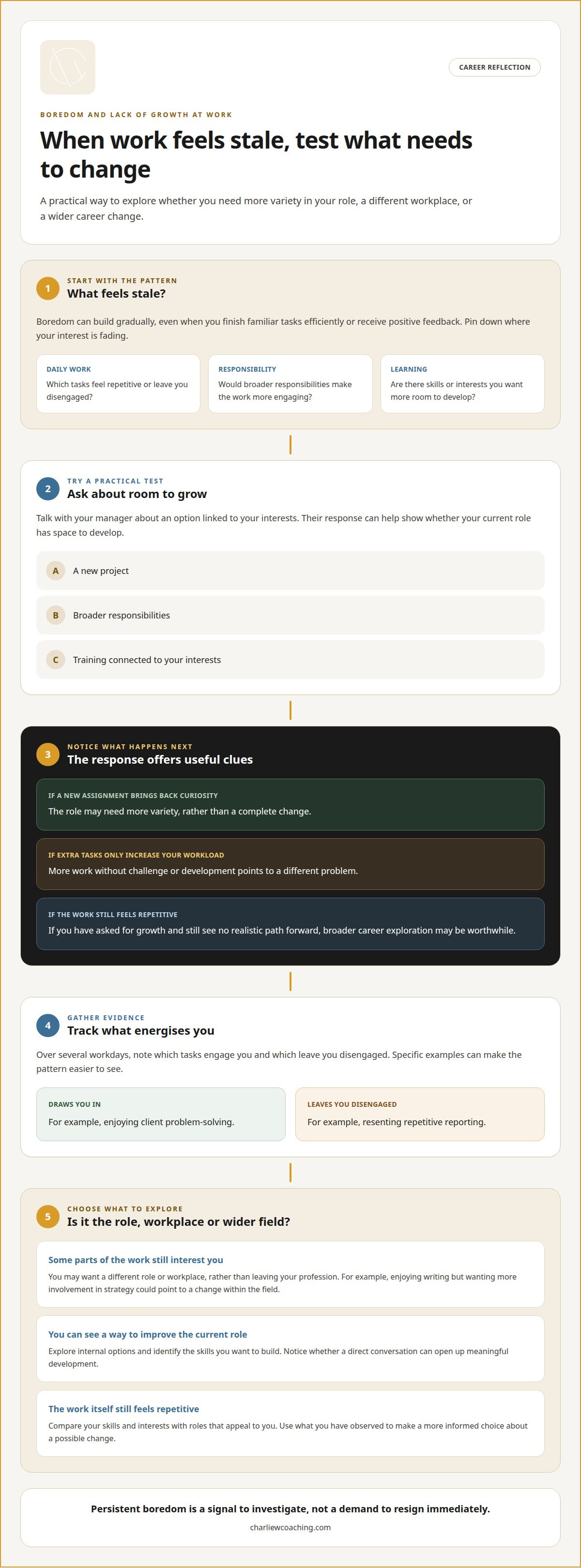
Boredom at work can creep in gradually. You may finish familiar tasks efficiently, yet feel little interest in what comes next. A project that once stretched your skills, for example, may now feel like another item to clear from your inbox. This can be a useful signal, especially when the feeling persists despite positive feedback or reliable performance.
Start by identifying what feels stale. Is it the daily work, the level of responsibility or the lack of learning? Then try a practical step: ask your manager about a new project, broader responsibilities or training linked to your interests. Their response can show whether there’s room to grow in your current role.
Notice what happens after that conversation. If a new assignment brings back curiosity, the role may need more variety rather than a complete change. If added tasks simply increase your workload without offering challenge or development, that’s different. According to the U.S. Bureau of Labor Statistics, about 214,500 openings for heavy and tractor-trailer truck drivers are projected annually, on average, over the decade.
That figure illustrates one possible area to explore, not a recommendation to enter trucking. A career shift should reflect the work you want to do and the conditions you need. Someone who enjoys practical problem-solving might explore hands-on roles, whilst someone energised by collaboration could look for more teamwork. The useful question is what kind of challenge feels meaningful to you.
Before deciding, separate boredom with your job from boredom with your wider field. List the tasks that absorb you, those you put off and the skills you’d like to use more. A communications professional, for example, may still enjoy writing but want greater involvement in strategy. That could point to a different role or workplace, rather than leaving the profession altogether.
Look for evidence of progress, too. Have you learned something new, taken on responsibility or moved towards a goal that matters to you? If those opportunities are missing, consider whether a direct conversation could change that. If you’ve asked for growth but the work still feels repetitive, broader career exploration may be worthwhile.
Give yourself a clear way to assess the pattern. Over several workdays, note which tasks energise you and which leave you disengaged. Record specific examples, such as enjoying client problem-solving but resenting repetitive reporting. These observations can help reveal whether the issue is one part of your role, limited development or a deeper mismatch with the work itself.
Persistent boredom doesn’t mean you must resign immediately. It means you can make a more informed choice by testing what might improve your experience. Explore internal options, identify the skills you want to build and compare them with roles that interest you. If those steps reveal no realistic path forward, the signs you need a career change may be becoming clearer.
2. Dreading the job or workplace
If Sunday evening brings a knot in your stomach, notice what you’re anticipating on Monday. Perhaps it’s a particular meeting, your manager’s messages or the thought of going into the office. One difficult morning can happen to anyone. A recurring pattern, especially one you can link to work, deserves closer attention.
Try separating the job itself from its environment. You might enjoy designing campaigns but dread meetings where your ideas are dismissed. Or you may value helping customers yet feel tense because your manager monitors every conversation. Poor communication, lack of trust, micromanagement and hostile behaviour can all make a workplace difficult to face.
For a few working days, note the situations that trigger dread and what happens around them. Be specific: “I felt anxious before the team meeting because I expected criticism” is more useful than “work is awful”. Look for recurring patterns, such as unclear instructions, conflict with one colleague or a workload that leaves no room to recover. This can help you see whether the source is a particular relationship, the workplace culture or the role itself.
Then consider what might realistically change. If unclear priorities are the main problem, ask your manager to agree which tasks come first. If meetings cause the most stress, request a clearer agenda or another way to share your work. If a colleague’s behaviour is the trigger, consider what boundaries or support could help. A specific request makes it easier to assess whether the situation can improve.
Pay attention to the response. A manager who listens and follows through may make the role more workable. If you raise a clear concern and face repeated dismissal, hostility or blame, the problem may go deeper than one uncomfortable conversation. You don’t have to take responsibility for changing an entire workplace culture on your own.
Ask whether the dread follows you beyond the office, too. If you spend your evening replaying a tense exchange or can’t switch off before the next shift, the job may be taking more from you than expected. That doesn’t automatically mean you need a new profession, but it makes the pattern worth taking seriously, particularly if rest and adjustments haven’t helped.
Finally, compare your experience across tasks and settings. If you dread one supervisor but still enjoy the work elsewhere, a different team or employer may be enough. If the core duties feel wrong, exploring another line of work could make more sense. Repeatedly dreading work is a signal to investigate, not a demand to resign immediately. Use what you’ve observed to choose a thoughtful next step.
If the core work leaves you dreading your job every day, seek a new line of work. Work can take up a substantial part of your life, so persistent dread is worth taking seriously.
3. Burnout and mental health
Burnout can make ordinary work tasks feel unusually demanding. You might struggle to concentrate on a familiar report, feel emotionally detached from colleagues or finish the day with no energy for activities you usually enjoy. These changes are worth noticing, especially when they continue despite time away from work or attempts to adjust your workload.
The American Institute of Stress found that 83% of U.S. workers suffer from work-related stress. That figure doesn’t tell you what is causing your own experience, but it underlines how closely work and stress can intersect. Focus on your personal pattern: which demands leave you depleted, and whether the strain eases when those demands change.
To understand the pattern, keep brief notes about your energy, concentration and workload. Record whether late requests, unclear expectations or constant interruptions affect your ability to recover after work. Then identify a practical change to discuss, such as clearer priorities or protected time for focused tasks. If the strain continues, consider whether the role’s demands are sustainable for you.
Burnout is more likely to be linked to your working conditions, whilst a career mismatch can remain even when those conditions improve. If rest, support or changed responsibilities restore your interest, the main issue may be the working situation. If the core tasks and purpose still feel wrong in a healthier setting, consider whether a different career could fit better.
Base the distinction on evidence, not self-blame. A project manager, for instance, might feel depleted by relentless deadlines but still enjoy planning and coordinating work. Another person may recover after time off yet remain disconnected from the profession’s everyday tasks. Neither example proves a single answer, but both can clarify what needs attention.
Seek career coaching when you’re unsure whether to change roles, employers or fields and need help weighing your priorities. Seek support from a qualified health professional if stress is affecting your health, sleep, concentration or daily functioning. Career coaching can help you think through work choices, but it doesn’t replace mental health care.
Before making a major decision, consider what could change in your current situation. You might ask for a more manageable workload, clearer boundaries around availability or a review of your responsibilities. Note what improves and what remains difficult. If changes ease the exhaustion but not your lack of connection to the work, that distinction can guide your next steps.
Persistent burnout can signal that your current role isn’t sustainable for your wellbeing. It doesn’t mean you must resign immediately or that changing careers alone will resolve every source of stress. Treat your health as important information, seek the right support and use what you learn to decide whether the role or career itself needs to change.
Comparing your career with others’
A former classmate’s promotion or a colleague’s career announcement can make your own path feel smaller. Before treating that reaction as proof you should leave, identify what you envy. Is it their autonomy, creative work, recognition or flexibility? If a friend’s move into teaching appeals because they support others, for example, the clue may be that you want more meaningful contact, not their exact job.
Separate the visible outcome from the everyday work behind it. A polished professional profile may show a new title, but not the routine tasks, pressures or compromises involved. Write down what you know about the role and what you’re imagining. Then look for first-hand descriptions, speak with someone familiar with the work or review job advertisements to understand its actual responsibilities.
Use comparison to clarify your own priorities. Choose a specific person whose work interests you, then name the qualities that stand out. If you admire a colleague’s influence, you might want more responsibility in your current field. If you’re drawn to a friend’s independent work, consider whether autonomy matters more than their industry. This turns a broad feeling of falling behind into a more useful question about fit.
Keep your circumstances in view. A parent comparing their schedule with a colleague who travels may want greater flexibility, not a different profession. Someone watching a former classmate retrain may feel pressure to make a dramatic change, when they actually want more development in their existing role. Your responsibilities, values and preferred way of working matter as much as another person’s milestones.
You can explore a new career whilst keeping your current job by looking at job postings in different career areas for 30 minutes every day. Note recurring duties and required skills, then identify one small way to learn more, such as speaking with someone in the field or taking on a relevant project at work. This lets you investigate possibilities without treating comparison as a reason to resign.
At the end of each week, review what held your interest. Did you save roles because their tasks sounded rewarding, or mainly because their titles seemed impressive? If you repeatedly notice roles involving research and problem-solving, those themes may point towards a direction worth exploring. If the appeal fades when you examine the daily work, the comparison may have highlighted recognition or status rather than a genuine career preference.
Comparisons can reveal dissatisfaction, but they can also uncover a goal you haven’t named yet. Use the feeling as information, test it against the practical work involved and keep your own definition of progress at the centre. A considered next step should make sense for your life, not simply reproduce someone else’s career story.
5. Potential signs that a career change may be needed
Consider a change when dissatisfaction keeps returning across different projects, teams or working conditions. There’s no set period you must feel unhappy; look for a persistent pattern, especially after reasonable attempts to improve your role. If a new project adds challenge but your work still feels misaligned, for example, the issue may go beyond routine.
Ask yourself what you want work to provide and what it currently takes away. Do you have room to grow, feel respected and recognise your values in your organisation’s decisions? If your employer repeatedly blocks advancement despite your interest, or asks you to act against your ethical principles, those are important signals. Feeling unable to be yourself at work matters, too.
Assess your transferable skills by listing tasks you’ve handled successfully, then naming the abilities behind them. A project coordinator might draw on planning, communication and problem-solving in a different field. Compare those abilities with the responsibilities in job descriptions and note any gaps. This helps distinguish skills you can carry forward from knowledge you’ll need to build.
In the US, the financial risks of changing careers depend on your current commitments and the transition itself. Consider whether a move could affect your income, benefits, savings or regular household expenses, and whether training or time between roles would add costs. Compare these factors with the likely pay and working conditions of the roles you’re considering. Avoid deciding based only on a job title or assumed salary.
You can change careers without returning to college by building relevant experience through work projects, short courses, independent study or volunteering. Someone moving towards digital marketing, for example, could practise campaign planning in a current role and develop a portfolio of completed work. The right route depends on the skills employers expect and the evidence you can show.
Plan the change in manageable steps: clarify what you want from work, research roles, map your transferable skills, identify gaps and decide how to address them. Then consider practical constraints, such as timing, family responsibilities and income needs, before setting a transition plan. Applying for a related role first can help you test the direction gradually.
A career change deserves serious consideration when your values, growth or sense of purpose remain out of step with your work after you’ve explored realistic adjustments. You don’t need complete certainty to start planning. Begin with one specific action, such as comparing your skills with a role that genuinely interests you, and use what you learn to shape your next decision.
A Gallup survey found that 32% of U.S. employees feel engaged in their jobs, while 87% of employees are not actively engaged in their jobs. Workers who have gone as far as they can in their current position may want to consider a job change. A new career may also be worth considering if a boss will not offer a promotion despite a wish to advance at the current workplace, or if an employer’s decisions conflict with personal ethical values and company values clash with a person's own.
Charlie Whalley Coaching: Career Transition Coaching
Charlie Whalley Coaching offers Career Transition Coaching for people weighing a change or seeking clearer direction. If recurring dissatisfaction has raised questions about your next move, coaching can help you explore what matters, recognise your strengths and consider possible paths forward. You don’t need to have a new career fully mapped out before beginning.
Working through uncertainty with support can help turn broad concerns into practical decisions at a manageable pace. This can be useful if you’re weighing a different role, a new field or how to move forward with greater confidence. The choice remains yours.
Ready to speak? Book a discovery call to explore how it could work for you.
Choose a next step that feels possible
You don’t need to have your whole future mapped out before you act. Start with one grounded decision: identify what you want more of in your working life, then choose a small step to explore it. That might mean discussing a new responsibility, learning about a different role or setting aside time to reflect on what matters most. Progress can begin with clarity, not a resignation letter.
If the signs you need a career change feel familiar, give yourself room to consider what a better fit could look like. Career coaching can support you as you weigh your options and build confidence in your direction. A thoughtful conversation may help turn uncertainty into a practical next step.
Contact Charlie Whalley Coaching to talk through your career transition. You’re allowed to move at a pace that feels right for you, and to shape a working life that better reflects who you are now.
Frequently Asked Questions
What are common signs you need a career change?
Common signs include losing interest in work you once valued, feeling that your strengths go unused or seeing no meaningful path towards goals that matter to you. Notice how you respond to a realistic opportunity: if a role that fits your skills and priorities still leaves you persistently disengaged, explore what you want your working life to offer. One difficult week alone doesn’t tell the whole story.